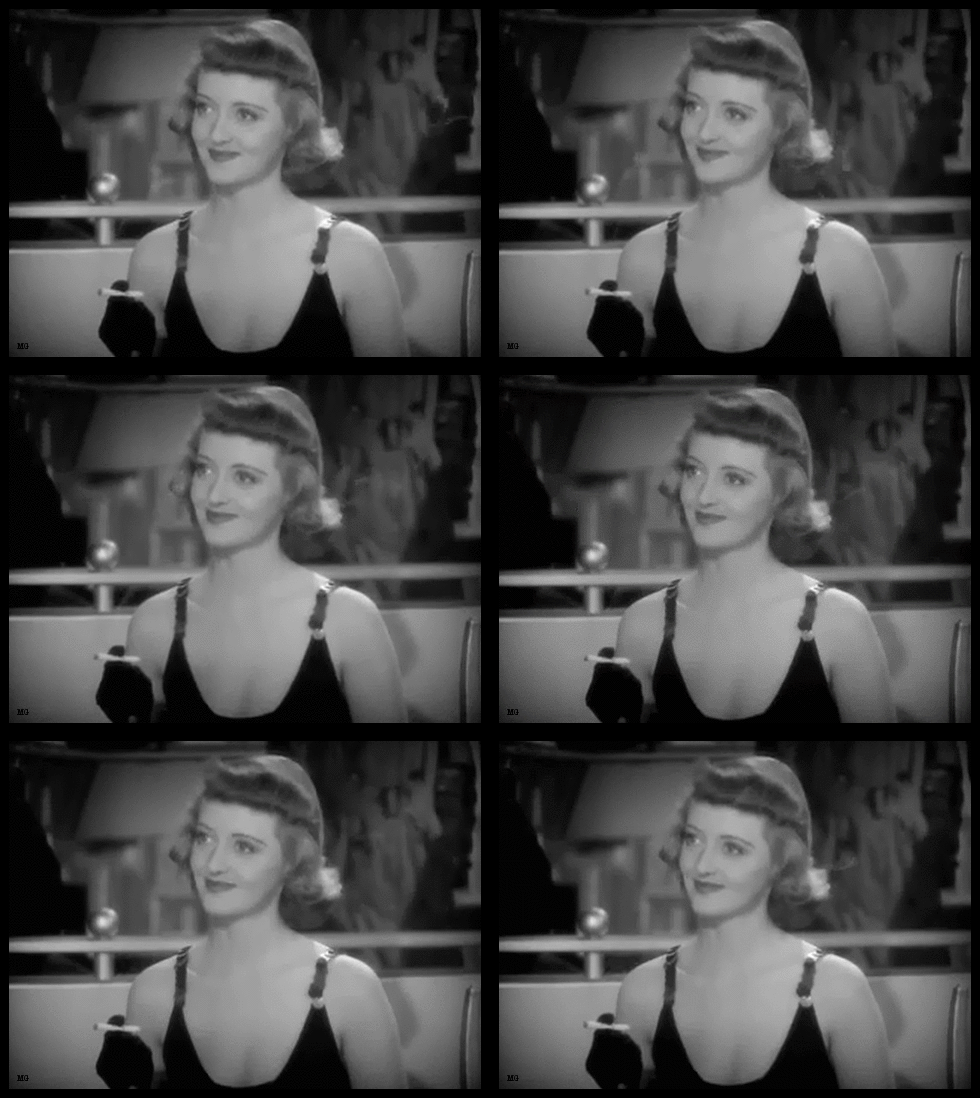
Miss Davis with one of her many beloved dogs, Tibby.
As I look back on my life, the profound significance of October 6th is truly awesome. It all began when I was just over a a year old: although unbeknownst to me at the time, October 6th, 1982 was the commercial release date of Madonna’s first single, “Everybody”. I don’t think I need to detail the impact that the first rung on Madonna’s ladder would ultimately lead to in my own life.
Exactly one year later was the more profound October 6th for me. That was the literally awesome day when I met my newborn sister Jennifer for the first time, just before she came home from the hospital. I've been blessed to share most of my life journey with her, for she truly became my first and most defining friend.
On October 6th, 1991, our dog Frisky came into the lives of Jen and I, soon to be joined by her equally beloved sister Chloe. And they changed us both forever.
In the interim between the October 6th milestones that saw Jennifer and Frisky become defining parts of my time here on Earth, there was the October 6th when the whole world lost an artist and a heroine and gained an angel and a Goddess. It is no exaggeration to say that my life would never be the same. I refer to the October 6th of 1989, and to the death of Bette Davis.
Looking back as an adult, and verifying my theories via a calendar for 1989, I can surmise that my family was spending Columbus Day weekend on Cape Cod. We took two cars to get there from where we lived at the time, and my Mom and my sister and I left after my Dad, who arrived at the house while we were still en route. I still remember my mother getting the call on the vintage car phone in our station wagon. It was my Dad, telling my Mom to tell me that Bette Davis had died. The news must have just broken, and I can imagine that that night it would have been all over CNN, which I remember him always watching. The next morning, there was a gorgeous photograph of her face on the front page of The Boston Herald when I came downstairs for breakfast. I vividly remember that moment of seeing that newspaper and, internally, making peace with the finality of her passing. And for nearly ten years, the photo that they selected was immaculately recreated in my memories, too. But I can no longer definitively recall which photograph it was, for I went on to become such an enamored fan that that part of my memory was eventually lost among hundreds of beautiful still photos of Miss Davis that I have since laid eyes on. I strongly believe it was either the most iconic photograph used in the promotion of William Wyler's The Letter or a publicity shot of Bette as Margo Channing in Joseph L. Mankiewicz's All About Eve. I have trace memories of slightly longer hair, like Margo’s, yet with her face sparkling in that indescribable way it always did during the best years at Warner Bros. Either way, she looked utterly beautiful splashed across the whole cover of one of her hometown's two biggest newspapers.
I loved Bette Davis at the time that she died, which was why my father wanted my mother to be the one to break the news to me. But I had a narrowly focused way of showing idol worship at that age, for I was apt to be intensely fixated on only one era in a person’s career. In the case of Diana Ross, my favorite singer at the time, my obsession was all-consuming and yet relegated exclusively to her years with The Supremes. I worshipped Diana, but only as I would have in the 1960s, as if her incredible solo career had not even happened. (Thankfully, I got to enjoy the rest of her magnificent career many years later!) In the case of Bette Davis, I was fascinated and in awe of who she was in the 1980s, as opposed to any decades prior. This was based largely on the impact of being introduced to her via John Hough's infamous/brilliant Disney horror film The Watcher In The Woods. I had not only not been afraid of Bette Davis, as many traumatized members of my generation apparently were, but came away adoring her and apt to rewatch the film, and her performance, repeatedly.
My adoration of Bette Davis was also based on her priceless talk show appearances. I gather that her ventures into late-night television were always legendary, but they seemed to take on a new air of importance in the 1980s, when she did not let her unbelievably debilitating stroke stop her from electrifying TV audiences with vivid recollections and a razor sharp wit. There was a relevance to the fact that the indomitable Bette Davis should come back from suffering a double mastectomy, a stroke, and a broken hip all within a year to still be the greatest star on the planet. The stroke dramatically affected her ever-copied persona, inhibiting her oft-imitated speech and limiting her defining use of body language. But she soldiered on, proving to the public that nothing could stop Bette Davis. She unconsciously formed a whole new set of mannerisms and speech patterns after the stroke, and it was this grande dame persona that I fell in love with as a child.
The place where I fell in love with Bette was, beautifully enough, Cape Cod, where her theater career blossomed at The Cape Playhouse. It was in Cape Cod where I have the most vivid memories of endlessly rewatching The Watcher In The Woods as well as seeing Bette on TV one afternoon thanks to a late-night TV appearance that my father taped for me the night before. (Like that fateful newspaper cover whose image has dimmed in my memories over the years, I cannot say with any certainty which Bette Davis interview(s) I watched as a child, because I have seen so many since.) And indeed it was en route to Cape Cod that I learned that the incredible life of Bette Davis had come to an end.
The Cape Playhouse, as photographed in 2010 for Cape Cod Today.
About nine months after Bette died, my family and I lost our beloved Grandma Mary, an “adopted grandmother” who had been as integral a part of my and my sister's childhood as both of our biological grandmothers. Grandma Mary’s death was the first loss to hit so close to home. Seven years later, my father lost his mother, and less than two months ago, my mother lost her mother. My sister and I have since found ourselves living in a world without the physical presence of the three matriarchs of our childhood and adulthood. These three losses in many ways are the defining signposts of my personal timeline up to this point. And the loss of Bette Davis preceded all three of them.
I had already been fascinated with the concepts of life and death and differing perceptions of reality at an extremely young age. But the passing of Bette Davis was the first time my life was consciously affected by death. I was saddened and yet neither afraid of nor confused by the death of Bette Davis. Whether because of upbringing, intuition, or some profound spiritual influence, I put emotions aside and accepted the idea of life ending with death despite, or perhaps because of, a belief in the immortal spirit. My perspective on the sharp distinction between physical and spiritual death has never wavered. I do not feel guided in this by doctrine or delusion or fear, but rather by an internal understanding that has remained with me for as long as I remember being alive. I cannot say that Bette's death fully prepared me for any of the subsequent losses yet to be endured, but I believe that my actively accepting the notion of Bette Davis in spirit has absolutely guided me in the ensuing quarter century.
The back cover of the 1962 first edition of The Lonely Life.
I suppose you could say that I have always considered Bette Davis to be the standard-bearer for all of humanity. But it was not until a decade after her passing that I actually dove into her filmography. In 1999, I read her last book, This ‘n That, saw many of her classic films, and even wrote about Bette Davis (along with Madonna and Dario Argento) for an essay that apparently helped get me accepted into Emerson College. In the mid-2000s, a number of DVD releases reignited my interest in her career and prompted my finally reading her earlier autobiographies, The Lonely Life and Mother Goddam. I ADORED both books, but it was The Lonely Life that offered an unprecedented insight into the mind and heart of an individual who was far more like me than I could ever have realized simply by watching her films or even her dazzling interviews. I feel that I reaffirmed a deep spiritual bond with Bette Davis when I read The Lonely Life at the age of twenty-four. It has since become my favorite book, and based on what I have learned in the ensuing years, I believe it offers a very strong suggestion that Bette Davis was, like myself, an individual with autism spectrum disorder (ASD). Bette's unrelentingly honest insights into her all-consuming drive, obsessive perfectionism, constant desire to work, and lifelong struggles with personal relationships were as relatable to me at twenty-four as they still are at thirty-two. These shared traits are also part of what lead to my being diagnosed with Asperger's Syndrome/High Functioning Autism. There is much discussion online, thanks to communities like Wrong Planet and one of my personal heroes, Rudy Simone, about the nuances of ASD in individuals like myself and many female Aspies who "hide it" underneath a protective veil of feigned charisma. We may never know if Bette Davis was on the autistic spectrum, but based on evidence left behind, I believe she was. And I believe that that makes her an even greater role model to millions of people just like me.
Aside from being the greatest of artists and finest of human beings, Bette Davis epitomized Joseph L. Mankiewicz's notion of "a great star". I must admit that Bette has even eclipsed Madonna as my favorite star--but Madonna is, of course, a very close second!It really is something that Bette's best films, from any given era of her career, still entertain new generations of viewers in the exact same way that they did upon their initial release. And thanks to Bette's impeccable taste and domineering influence, her best films still hold up on artistic merits, too. In her work and in her life, Bette underlined the role that a brilliant mind plays in being "a great star" versus merely "a celebrity". I take stardom very seriously because of Bette Davis. And I would argue that every culture benefits from stars who break barriers and inspire masses, which Bette Davis did in spades both during, and indeed long after, her incredible lifetime.
We all know the couple: the hot-headed lover who keeps
testing the patience of an even-keeled partner who forever winks and smiles and
puts-up-with. We've all been witness to it, and many of us have been or will be
a part of that cycle--perhaps playing both parts in different
relationships. And for those of us more apt to personally identify with the former personality than the latter, there is no greater fear than that of a partner who
one day throws up their hands and says "I've had enough!"....and
means it. Under the direction of the peerless Hollywood master William Wyler, Bette Davis and Henry Fonda play out such a scenario against the backdrop of Louisiana in 1852. The film was Jezebel, an Oscar-winning box office smash that opened at Radio City Music Hall on March 10th, 1938, launching Bette's reign as Queen of Hollywood.
Bette Davis on the role William Wyler's Jezebel played in shaping her future.
Jezebel is rightfully touted as an epic Southern melodrama, but
its impact is derived from how easily its characters and relationships could be
transplanted to any other time or place. This, among many other reasons, is why
I consider itvastly superior to the
classic film which it has always lived in the shadow of: Gone With
The Wind. Last year, I wrote a 75th Anniversary tribute to Marked Woman, the unsung classic that began the greatest chapter of Bette Davis's career. William Wyler's Jezebel, released eleven months later, was the film that Miss Davis always credited with "making me a box office star", so I felt I
should write another tribute. Alas, time kept that from happening. Instead,
here's a recently discovered paper I wrote in high school for a favorite teacher, Mr. Raymond Carrey. Mr. Carrey was already a passionate feminist, but I hoped to expand his canon of great feminist texts by encouraging him to look at the films of Bette Davis in a new way. I'm happy to say he liked my work.
Robert
Jeffrey 5/18/99
The Rise and Fall of Hollywood’s
Studio System
When I set out to research Hollywood’s
studio system from its beginning to its ultimate demise, I had no idea that
such a task would involve researching every single studio’s individual history.
In spite of the fact that Hollywood’s studio system had always been a practice and
an institution which I have found to be complex and fascinating, I had always
been under the false impression that it was some kind of a sprawling Empire. I
knew that there was a great deal of individual studios promoting their own
stars and filmmakers, but what I did not know was that each individual studio
began their own, private Hollywood journeys at different times and for
different reasons. Therefore, I have decided that it would be best to pursue
the rise and fall of The Warner Brothers Studio. In addition to the studio’s
interesting timeline, Warner Bros. was well known at the time for making films
that were about cultural significance as opposed to scope and glamour. “Warner’s….was
more closely associated with realism and some excellent social-problem films,”
said actress Agnes Moorehead at one time. “MGM was bigger, but today the
critics esteem Warner’s highly.” (Hadleigh, 155)
The Warner Bros. Studio came into
the Hollywood power game relatively late. When the studio began to form, in the
early 1920s, MGM and Paramount dominated the industry. (Schatz, 58) The studio
that would be Warner Bros. was thebrain
child of four brothers from the East Coast: Sam, Abe, Harry, and Jack. The
brothers started out by distributing films during the period of 1910-1919,
aided by the powerful Wall Street broker, Goldman Sachs. Sachs saw the
potential for the film industry to become a major force in American economics,
and was sure that he could propel the Warner Brothers ahead in this boom.
(Schatz, 59)
In 1920, the brothers emigrated to
the West Coast, where they leased a facility for producing films. There, they
produced several feature films. In 1922, the brothers moved on and bought a 10
acre plot of land, where they developed The Warner Bros. West Coast Studio. In
1923, the evolution of a studio was in full swing. The name of the studio/production
company became “Warner Bros.”, and the brothers received a donation of half a
million dollars from an LA banker by the name of Motley Flint. The money was
split between upgrading the studio development, buying rights to several stage
plays, and producing the first ever “Rin Tin Tin” movie, Where The North Begins. (Schatz, 59-60)
The studio continued to grow and
enjoy smashing success throughout the 1920s. By 1925, the studio had released
more than 25 films, and signed several solid stars to contract. The studio
upped its budget/production schedule to thirty pictures per year, and the
studio expanded its distribution by buying more second-run movie houses
(theaters in small, suburban areas with less splendor than first-run film
houses) and by building several huge, extravagant first-run movie houses.
(Schatz, 60-61)
It was in 1927 that Warner Bros.
forever changed the medium of filmmaking. In February of that year, several
studios had announced that they would not be incorporating sound into their
films for at least another year. The studios apparently felt that this was too
risky a venture, and that the orchestration that accompanied films in first-run
movie houses was appropriate enough. (Schatz 64) Warner Bros., in an attempt to
compete with more well-established studios like Paramount, MGM, and Universal,
opted to take a risk and woo a larger audience with the attraction that sound
offered. The risk paid off. (Schatz 64)
The studio’s first feature to offer
sound was The Jazz Singer, a film
that offered little plot but still a great deal of music and minimal spoken
dialogue. The Jazz Singer was a box
office phenomenon, earning a then-spectacular $3 million and prompting Warner
bros. to churn out more “talkies”, as sound-capable films were called, so as to
beat the other studios to the punch. Once again, their plans paid off, as the
studio continued to soar as a result of this technical advantage over Warner
Bros.’ competitors. (Schatz 64)
The 1930s is considered by some to
be the finest decade in American cinema. It was also one of the most
influential. The ‘30s marked the beginning of Technicolor, the introduction of
some of American cinema’s brightest stars, and the first time in American
history when a nation of audiences could escape to a fantastical world of
fiction and fantasy during the harsh reality of their lives. (Schatz 199)
Coinciding with the public’s definitive embrace of American cinema was the
beginning of the stars’ resistance towards the oppressive studio system. (Schatz
200) While numerous stars would take part in the rebellion against the
oppressive studios, perhaps the earliest and most public rebel was screen
legend Bette Davis.
Warner Bros., not unlike every other
studio, was willing to go far to publicize a new movie. In the case of the 1939
film Juarez, the studio reportedly
paid a man to jump into a cab, tell the driver to “Take me to Juarez!”’, and
then travel all the way to Juarez, Mexico. The next day, headlines appeared in
newspapers proclaiming that “Fan Drives 2500 Miles to See Juarez!”. Such an extravagant and original publicity stunt was not
especially uncommon during the era when studios controlled filmmaking.
(Hadleigh, 198) However, controlling all aspects of filmmaking also meant
controlling actors, and such a dominating presence was eventually resisted by
actors hungry for artistic freedom.
“Well, the so-called Golden Age of
Hollywood was not necessarily that golden…it was damn trying at times,” said
Bette Davis of her days as a young actress. “We were properties of Warner Bros.
We were contractually bound. We were indentured. Of course, I fought to help
end the feudal system…[Myself and other actors] fought to improve it, but the
studio system was a form of slavery, undeniably.” (Hadleigh, 57) Davis’s
sentiment reflected the view of many performers in Hollywood. Actor Tyrone
Power once even compared Hollywood to “a gilded cage”. (Hadleigh 57) Unlike
today’s studio system, in which actors are cast in individual pictures or
perhaps commit to several films as part of a contract, in the 1930s the
majority of actors worked for one studio all the time. The studio would “own”
them for a certain period of time, provide them with steady work and a steady
pay, and require them to comply with certain studio demands or risk suspension
or revocation of contract. (Davis 30) In addition, female performers faced
harsh punishments if they did not comply with certain “sexual obligations” that
the studio had placed upon them. Furthermore, reporting such harassment could
result in a woman’s career coming to an abrupt end, as Bette Davis would later
describe in an interview:
I’m so thankful I
never had to rely on my looks. I survived on talent and temperament. If I’d had
to make it on the casting touch, I’d have screamed “Rape!” and that would have
ended my career! Oh, it was terribly unfair—much more unfair on the actresses.
(Hadleigh
58)
Although
Davis did not detail the corruption of the studio system until later in her
life in various interviews and publications, she ended up making positive improvements
in the system—without even intending to. Her persistence and perseverance in
the demand for challenging roles would go on to make her a star, and to eventually
open more doors for actors and actresses to come. (Staiger 205)
By
the time 1934 rolled around, Bette Davis had completed 21 films, most of them
supporting roles with little depth. Tired of being written off as a supporting
player in paper-thin roles, Davis fought hard for Warner Bros. to “loan her out”
to RKO Pictures to make a film entitled Of
Human Bondage. Although studios did, on occasion, loan a contract player to
another studio for an individual film, this particular move seemed especially
unusual because she was fighting hard for a non-glamorous role that had been
turned down by virtually every actress in Hollywood. Whether it was out of
having been convinced or simply tired of Davis’s persistence, Jack Warner, who
at the time made the majority of decisions regarding the artistic side of
filmmaking, allowed her to go. “Go ahead, hang yourself!”, he reportedly told
Davis, referring to the fact that the role could very well end her potential
career. (Wiley & Bona 53)
To
say the least, Jack Warner was wrong. Though Of Human Bondage was only modestly successful at the box office,
critics and audiences hailed Davis’s performance as a revelation, with Life magazine going so far as to call it
“probably the best performance ever recorded on the screen by a U.S. actress”.
(Wiley & Bona 53) Davis’s rebellious tendencies would also yield two other
smashing success stories during the 1930s. In 1936, still dissatisfied with her
roles, Davis was suspended by Warner Bros. for refusing to work until demands
were met for a new contract. During her suspension, Davis traveled to England
to discuss a possible film contract with an independent production company.
Warner Bros. successfully sued Davis to prevent her from signing. Bette was
unfazed by the lawsuit, and immediately after returned to work at Warner Bros.,
no longer pleading for modifications in her contract. In retrospect, it is
widely believed that the lawsuit was just what Davis wanted, for when she
returned the studio began to offer her far better material, starting with a
role in the film Jezebel. David was
ecstatic about the role in Jezebel, which
would offer her far more depth than many of her previous screen endeavors. The
enthusiasm apparently translated to the screen as well. Jezebel, which predated the similarly themed Gone With The Wind, was an acclaimed box office blockbuster. The
Southern epic earned Davis a Best Actress Academy Award and solidified her as
one of the nation’s top box office stars. (Staiger, 79-80)
1938's Best Actor & Best Actress: Spencer Tracy for Captains Courageous
and Bette Davis for Jezebel
In
1939, Bette Davis fought for a role in the film Dark Victory, the tragic and inspiring tale of a wealthy young
socialite who is stricken with a brain tumor. The film was initially seen as
being too dark and depressing, with Jack Warner proclaiming that “no one wants
to see a story about a girl who dies”. However, the film was released, became a
box office success, and earned Davis her third Academy Award nomination.
(Hadleigh 95-96) Although it marked a tremendous personal achievement for
Davis, it marked perhaps an even greater achievement for all women. Although
pictures with strong female leads been successful in Hollywood throughout the
1930s, Dark Victory ushered in a
period in Hollywood during the early 1940s when women did more than just make
up a large portion of the box office: they controlled it. Dark Victory was written for and about a complex female lead, and
explored numerous emotions that were not always typical of the glamorous
leading ladies of archetypal Hollywood films. In the years to come, Miss Davis
would lead the pack of numerous actresses who spoke directly to the emotions
and plights of all women, at times delving into emotional territory that has
not since been seen on the screen. (Hadleigh 111)
The
1940s offered a chance for Hollywood to become even more embedded in American
society than ever before. World War II was going on at the time, and many
actors, like most Americans, were feeling a great sense of nationalism. It was
during this period that stars began to entertain troops in barracks, serving
food and socializing at the Bette Davis-run Hollywood Canteen. It was also when
celebrities began to promote the sale of war bonds, either through contractual obligation
to a studio or, perhaps more commonly, through their own will to be patriotic.
(Schatz 302)
Bette serving troops at The Hollywood Canteen
It
was also during this period, in 1940 in particular, that Hollywood began to
incorporate non-white actors in significant roles in mainstream film. No
example is more well-known or significant than the casting of African American
actress Hattie McDaniel in the phenomenally successful Gone With The Wind. Segregation was still very firmly a part of
society during the film’s release in 1939, so much in fact that McDaniel was
excluded from the film’s Atlanta premiere. However, in 1940, she became the
first African American to be nominated for an Academy Award. On February 29th,
1940, Hattie McDaniel became the first-ever African American to win an Academy Award. Presenter Fay
Bainter, before announcing the award’s recipient, told the audience that the
night was “a tribute to a country where people are free to honor noteworthy
achievements regardless of creed, race, or color.” At the announcement of
McDaniel’s name, she received the biggest cheer of the whole night, and called
this “the happiest moment of my life”. (Wiley & Bona, 98-100)
In
spite of McDaniel’s achievement as both an actress and an African American, and
Hollywood’s enthusiasm for her merit, Hollywood has since been accused of
putting McDaniel in a stereotypical role that mocked her ethnicity as opposed
to celebrating it. In addition, Hollywood took a great deal of heat for casting
black actors and actresses only in roles that offered entertaining stereotypes
to the studios’ target white audiences. Such an accusation is most certainly
justified, but the situation of black actors in films during the 1940s actually
exposes the dramatic differences between the mindsets of Hollywood filmmakers
and actors and the studio heads. Hollywood was known for being a “safe” place
for homosexuals, for most actors were far more accepting of this lifestyle than
the majority of Americans. In addition, the majority of Hollywood personalities
were open to equality and civil rights, even at a time when segregation existed
and racism ran rampant in every city and town in America. Many of the studio
heads were, on a personal level, sympathetic towards black actors, but felt the
need to play to an audience that did not necessarily have as open a heart as
the people who made up Hollywood. (Schatz 315) Such an example involved The
Hollywood Canteen. Bette Davis, who was President of this establishment that
provided entertainment and recreation for troops, refused to permit segregation
of any kind. To anyone that dared defy her, she reminded them that “the blacks
got the same bullets the whites did and therefore should have the same
treatment.” (Davis 128) However, the studios feared the possibility of white
troops being photographed with black hostesses, for if word got to the South,
potential donors to the Canteen might back out. (Davis 128)
Such
a profit-over-humanity mentality hindered the beliefs of a slightly more
progressive group of people, and thus many talented black performers were force
to reduce themselves to stereotypes for the sake of “not coming on too strong”
for the white audiences. Even though the casting of black actors in somewhat
offensive roles was not the way to go about promoting equality, the awarding of
an Oscar to Hattie McDaniel was perhaps indication of a desire for equality and
acceptance, even if it was only within the confines of Hollywood. (Staiger 168)
The
1950s offered far more progressiveness, but also a sense of independence that
would ultimately lead to the fall of the Studio System. The extremely popular
1957 film Sayonara, which starred
Marlon Brando and dealt with the then-controversial subject of interracial
romance, earned supporting actress Miyoshi Umeki an Academy Award, making her
the first Asian actress to earn the Oscar. (Sackett 131) Marilyn Monroe broke
new grounds for actresses when she became the first woman ever to start her own
production company. (Staiger 192) In addition, actors and filmmakers were
becoming more independent, with only a handful of the decade’s top stars
contractually attached to a studio. More and more actors and directors were
free to work with whichever studio they chose, and this independence allowed
for greater freedom both artistically and personally. (Schatz 417)
Additionally, new, younger audiences were being targeted during this period
with such teen-oriented films as the classic drama Rebel Without A Cause and popcorn hits like Beach Blanket Bingo. The studios were certainly not losing any
money, and they still did exhibit power. (Staiger 299) However, this time the
power was directed in the area of promotion as opposed to near-slavery. Studios
spent a great deal of money producing documentaries to promote their films, and
also sought out specific demographics to target at the box office. (Staiger
304)
My favorite scene from Rebel Without A Cause
By
the time the 1950s were over, so was Hollywood’s Studio System. Film historian
Thomas Schatz made an interesting statement when he claimed that perhaps Alfred
Hitchcock’s 1960 film Psycho was the
ultimate symbol of the end of The Studio’s reign. He points out that Psycho was a low-budget film with a
television crew and a tight shooting schedule, and that the film’s then-graphic
violence and sexuality was a far cry from the films of the 1930s and 1940s when
studios heavily censored their material. (Schatz 489-490)
As
ironic as it may sound, Bette Davis actually applauded many elements of the
studio system in the later years of her life. Davis noted that while she was
frustrated with the lack of work she was being offered in her first two years
as a contract player at Warner Bros., those two years gave her a great deal of
preparation and training for the later roles that would define her career.
(Davis 113) She also noted the more positive means of promoting a film during
the reign of the Studio System, making specific reference to Warner’s
aforementioned promotion for the film Juarez.
“It was wonderful, good fun, and lots of imagination. No need for vulgarity or
sensationalism then.” (Hadleigh 198)
In
the four decades since the gradual demise of the Studio System, there has been
a great deal of criticism and admiration for an establishment that created what
are considered to be the finest American films of all time and perhaps the most
globally successful stars of all time. To some, the studio system was an
oppressive institution that treated actors as products to be sold and stifled
artistic experimentation. In addition, some feel that the System promoted
prejudice in America, and invaded the lives of the stars and filmmakers who
worked for studios and had to fear that their personal endeavors could jeopardize
a contract. To others, the studio system was a shrewd but brilliant part of
America’s history which strove for artistic integrity, signed actors based on
talent as opposed to box office success in previous films, provided all
Hollywood players with steady employment, and which defined careers through the
process of hiring writers to write roles for actors as opposed to simply
casting any actor for any role.
Performance
artist Madonna once stated, in response to a great deal of anti-1980s sentiment
during the past few years, that “As we move further away from the ‘80s, I think
that we will grow to analyze and appreciate them.” Such is the case for the
Studio System. Over the past few decades, the System has been slammed and
celebrated by a wide array of people, but if nothing else, perhaps this
criticism will lead people to appreciate the huge effect, whether it be
negative or positive, that The System has had on American culture outside of
film. During the 1930s, cinema played a vital role in helping audiences to
escape from the reality of The Great Depression. In the 1940s, Hollywood was as
actively involved with World War II as Washington, D.C. The System has also had
effects on race relations, racial stereotypes, the changing roles of women, and
the debate over artistic integrity versus profit. The Studio System built a
Hollywood that has affected every generation through images and messages, but
never to quite the degree that it did in the 1930s and 1940s. Oppressive or
artistic, the studios have played a vital role in shaping America’s cultural
landscape, and have left an impression that will affect many, many more
generations to come.
Looking back, I can finally see the impact that my first year of college had on improving my work as a writer....such as teaching me how to properly cite my sources. Hopefully the provided links will compensate for the citation information I left out fourteen years ago! (Although I failed to note in my paper that that Madonna quote came from an interview with Q magazine in Spring '98.) I also made a few mistakes that I would like to apologize for. I am a lot more familiar with Hollywood's studio system (specifically Warner Bros.) than I was in 1999, and must acknowledge that a lot of the material I presented exhibited a decided lack of understanding. As a result, I also did not properly convey the details of the trial that ensued when Bette Davis took Warner Bros. to court in England. Worse yet, I erroneously stated that Jezebel was the first film that Bette made after said trial (it was Marked Woman) and my paper unintentionally suggested that her only notable '30s films after Of Human Bondage were the Oscar nominees Jezebel and Dark Victory. Perhaps this was because they were the only films she made in the '30s that were available on U.S. DVD back in early 1999, but it leaves me a bit red in 2013 all the same.
I should also point out that (gulp) I wrote this paper before I actually saw Jezebel. I have loved Bette Davis since my childhood, when a combination of The Watcher In The Woods and her legendary appearances on the '80s talk show circuit made me an avowed fan. I vividly recall her death in 1989, but it was not until seeing a segment of the documentary The Warner Bros Story in 1996 that I became enchanted by her films and spent the second half of the '90s slowly absorbing them into my heart and soul. I first saw Whatever Happened to Baby Jane? in 1997. I first saw All About Eve in 1998. I first saw Of Human Bondage, Now Voyager, and Dark Victory in 1999, and in 2000 I finally saw Bette's first two films with William Wyler: Jezebel and The Letter. Since then I've seen more films and telefilms and TV & radio show performances than I can even keep track of. But those early years laid the foundation, and this paper was written right in the middle of the important period in my life when I developed as a screenwriter and cinephile thanks to the inspiration and legacy of the immortal Miss Bette Davis.
During my freshman year at an all-male Catholic high school, I was infatuated with a straight classmate. As in past entries, I refer to him as "James", because he so strongly resembled my teen romance ideal: James Marsden. James was only in two of my classes, and we never hung out off campus because he lived in another city. Yet I spent the next several years of my life in love with him—even though I never saw him again after the ninth grade.
Just over a year ago, I rediscovered a love letter that I wrote to James back in high school. I never sent it, but I decided to share it with the world, because it captured being hopelessly in love and hopelessly sixteen in a way that is universally relatable regardless of gender or sexuality. I timed its posting with the anniversary of Madonna’s Confessions On A Dance Floor, because I love that album like no other and wanted to underline that with an extra special blog post. This year, as the first in a series of deeply personal new entries, I thought I would celebrate “Confessions Day” by sharing the sobering follow-up to my unrequited high school love story. For some of you, it may turn out to be as empathetic as last year’s post, if less nostalgic and more humiliating.
I was convinced that James had feelings for me during that first year of high school, based on many brief but seemingly revealing exchanges. Even accounting for my overemotional adolescent perspective, I don’t doubt I was a little bit right: he was straight, but there still appeared to be something between James and I when we were fifteen...despite of our lack of any physical contact. It was fleeting and youthful, so much so that it would not have lingered on in the memories of people like James who live and grow in the real world. But for a cinematically inclined escapist such as myself, the experience was an unbelievably potent high, and I refused to leave it in my past. So I shed any semblance of shame and relentlessly pursued this literal dream romance. That is, until what began so subtly in our freshman year of high school came to an operatic finish in our freshman year of college.
I spent my sophomore and junior years waiting for my secretly admired to phone me out of the blue, revealing he’d been in love and waiting for my call until it became unbearable to harbor his feelings any longer. After two years of that never happening, I spent much of senior year trying to arrange an opportunity to hang out, hopeful that we could reignite a friendship if I could hide my feelings long enough to make him fall in love with me. Every effort to see one another failed, and I should have left it at that. But I could not allow myself to believe that James would not love me one day. I knew that to an outsider (which, at thirty-one, is what I am today) all of this would appear crazy. But to my eighteen year old self, the craziness was precisely what made it feel so romantic. Or, should I say, “so romantic comedy”.
By the first year of the 21st century, everyone but James knew about my feelings for James. Endlessly bemoaning the hole in my heart took its toll on my social life in the first semester of college, and never more than on New Year's Eve 2000. I was lonely and depressed, so I deliberately avoided Midnight by sitting in a movie theater by myself for the late show of The Family Man. It was my second viewing of the Brett Ratner film in which Nicolas Cage was a wealthy businessman who found happiness in an alternate reality where he’d married and had children with his great love, played by Tea Leoni. At that time, I was living a life of privilege and being afforded opportunities that I would not be able to fully appreciate until many years later. But I was consumed by the perceived void left behind when James went to a new school and I turned him into a benchmark which no other guy could match. I constantly dreamed of giving up all the monetary perks of my life in order to be with him, if only because such a sacrifice, I thought, would prove that my love had always been real.
My freshman year at Emerson College, and James’s first year in the military, both coincided with the peak of AOL Instant Messenger’s popularity. Somehow I got a hold of James’s screen name on there, and before long we were, like in my dreams come true, "talking" all the time. Right after Valentine’s Day 2001, following weeks of daily correspondence, I decided to throw caution to the wind and tell James everything. And when I say everything, I mean EVERYTHING. What I wrote was not that far off from my unsent love letter in its massive length and total shamelessness. But the difference was that what was sweet when I was sixteen was desperate when I was nineteen. I shared the unsent love letter with the world because I thought it was relatable for anyone who remembers being that age and feeling those feelings. But I cannot bring myself to ever re-read the one that I did send. James did not get to read the letter for several days, during which time we continued chatting online regularly. Then, one afternoon, I decided to escape my anticipation anxiety with film that I felt paralleled my longing: John Cromwell’s 1934 Bette Davis-Leslie Howard adaptation of W. Somerset Maughm’s Of Human Bondage. It was my second viewing, having seen the film two years prior when I began appreciating the films that made Bette Davis a star. But that day, it was not a piece of cinema history. It was a piece of reflective glass, and it was my life that was being reflected.
As soon as it ended, I went from my living room to my bedroom, where my pre-wireless laptop was connected to the modem. My AIM Away Message was onscreen, awaiting a response from James. That day, the message was a quote from Edgar G. Ulmer’s film noir classic Detour.
“That’s life: whichever way you turn, fate sticks out a foot to trip you.”
There was no word from James when I got to my laptop, but seconds later, before I could look away from the screen, his response appeared before my eyes. I don’t remember all of what he wrote, except that it was the longest piece of text I’d ever seen on AOL Instant Messenger written by anyone but me. Only the Cliffs Notes version remains in my mind: that he appreciated my friendship and respected me tremendously as a person but that he didn’t share these romantic feelings and would not be comfortable continuing to communicate with me at that point in his life. He was never anything but respectful, kind, classy….all the traits that made me fall for him in the first place. He did not respond the way I had dreamed of, but he wished me well on the rest of my life journey. Had I respected his wishes, we might have crossed paths down the line and formed some sort of friendship as mature adults. I should have left things there, because his message, while unbelievably disheartening, gave me the chance to quit while I was (sort of) ahead.
Alas, I had to continue playing the role, in my mind, of the hopelessly-in-love ingénue who would stop at nothing until she won the heart of her leading man. We shared our last correspondence mere minutes after I’d watched Bette Davis die onscreen in Of Human Bondage, and yet I was still convinced that my relationship with James was following a screwball comedy archetype. At the time, I thought I was being quirky. I now realize I was overbearingly obsessive. I continued to send long emails. I uncovered his new AIM contact information after he changed screen names. I even tried to buy his love the following Christmas by mailing him a gift: a CD book containing twenty favorite movies on forty Video CDs. The package, and its included letter, was opened and returned to me, minus any written response. From that moment on, I feared I was, to James, becoming the star of a different kind of film. The movie collection looked like a generous peace offering when I mailed it out. But it looked more like a threat than a gift when it was spat back at me. I trembled at the thought that James now saw me as Jessica Walter in Play Misty For Me, whereas all along I saw myself as Madonna in Who’s That Girl. Mainstream audiences clearly never appreciated the outrageous charm of Who's That Girl the way that I did. And James, clearly, did not find anything charming about my outrageous persistence.
Eighteen months after the worst Christmas gift idea of my life, I had finally purged this infatuation from my system. Prior to that, every few months I would find myself unable to resist emailing self-indulgent letters to James, letters that inevitably were really being written to/for myself. With each letter I was deliberately inviting him to loathe me, instead of wanting him to love me. At that time in my life, the former came much easier to me than the latter, and I knew it would for James, too. I hoped we could share, if nothing else, that same contempt. As I grew to forgive and love myself for acting in such an over-the-top manner, I moved past that moment in my life, and opened the door to meeting my best friend and entering my first relationship. I don’t know if James ever did end up hating me, but I have often hoped that he forgot me.
The conclusion of my story about the young man I refer to as “James” may not be what some readers of last year’s entry had hoped for. It certainly was not what I was hoping for when I was a teenager. But today, I’m thankful for the way things turned out. In interviews collected in the book The Girl Who Walked HomeAlone, Bette Davis told author Charlotte Chandler that “a watched telephone never rings”. I know that firsthand from the years I wasted as a lonely teenager relishing the role of “lonely teenager” far too much. Admitting my defeat forced me to finally acknowledge and improve upon the aspects of my personality that are adorable onscreen but destructive in real life. And, combined with my ABBA love, it gave me a unique appreciation that eventually lead to “Hung Up” becoming my favorite Madonna single of all time.
“High School Honor Student By Day. Hollywood Hooker By Night.”
My parents’ worst nightmare. My greatest fantasy.
I have always loved movies about prostitutes, and have always related to them in ways that made little sense
to others. Maybe it’s because I wanted to please everyone and
didn’t feel that I’d done a good job unless I left a room smiling. Perhaps it’s
because I felt I had to play so many different roles with so many different
people in order to achieve such a goal. Whatever the reason, I definitely loved
that tagline from Robert Vincent O'Neill's Angel every time I passed it in the video store. It would not be until the 2003 DVD release that I finally saw the movie and
loved it. But by then I’d already formed a fantasy, based on the concept, and on the cover, and on Roger Ebert’s oft-reprinted original review. The movie lived up to that
fantasy. I myself could not.
In 2000, I was working at a store that sold rare laserdiscs
and DVDs. Before throwing out a batch of semi-defective laserdiscs, the owner
asked me if I had ever seen the film pressed onto all of the slightly marred
copies: Ken Russel’s Crimes of Passion. Then and now, I am ashamed to say I
had not. It was yet another film that I had formed a video store fantasy
around, and even my own version of the movie in my head that starred Andie
MacDowell and Madonna and had absolutely nothing to do with the plot of the
actual movie. I didn’t even know that it was about a career woman who shields
herself from heartbreak by masquerading as a streetwalker named “China Blue”
and engaging in outrageous encounters.
Seeing the movie was a turning point, not least of all because I better understood
where my desire to be a streetwalker came from: I wanted to be wanted, but didn't want to need that.
I don’t remember when I first wanted to be a prostitute, but
I do remember when I first put up an ad for myself online. I had been reading
about the escort industry and looking into reviews of some of New York’s more
popular male sex workers. I even befriended one through a chat room, a nurse
from Maine who I could have seen myself falling in love with at the time. I was
flagrantly open with friends and even family about my sex industry ambitions because I found nothing about them dishonorable. In my school of thought, being a whore is nowhere near as sinful as being a freeloader. I also felt that
it would be an invaluable insight for my writing, a means of understanding some
of the “fallen women” in film who had most inspired me and to get a view of
life from the other side of privilege. Of course, such an endeavor has since
become a stereotype for naïve young college students and overambitious
journalists. I could have lost my life. I could
also have gotten arrested. Between the two, I would have taken the former: death scares me way less than cops.
The closest I came
to being a male escort was the closest I came to being arrested, and so that’s
why I ultimately closed up shop right before the grand opening. I put up an ad
online—ahem, on an “AOL Personal Homepage” no less—and included pictures I’d
taken of myself looking pouty and sweet. I don’t remember much about my
description, but I do remember that my rate was $100/hr. At that time,
in 2002, the going rate for male escorts was around $300/hr, so I thought that
I might have a shot at establishing a good customer base thanks to being twenty
years old and relatively low-priced. I was insecure about being overweight, but even so, I thought I was a bargain. After all, I ALWAYS aim to be fair.
Rob '02: Trying to sell myself on AOL as a precocious boy next door.
I was so proud of myself for thinking of my customers that I failed to remember prostitution is illegal in this particular country. I remembered that reality vividly when an “interested customer” called me up and seemed a little too interested in the details of my one-man business operation. So I told him I’d decided to give up being a male escort and, at that moment, I did.
I often regretted not being brave enough to do what I wanted
to do in spite of the warnings of everyone in my life and, indeed, the state
and federal government of the United States of America. I can admit now that
they were right and I was wrong—not because it’s bad to be a prostitute, but
rather because I would have been bad at it. I had never even met a sex
worker until a visit to Amsterdam in 2006 lead me to one of the most popular
male brothels in the city: Singel 21. There I met one of the most interesting fellows I
have ever encountered, and the one who made me realize that prostitution was
not nearly as appropriate a line of work for me as I hoped it would be.
His name was Zortak, or that’s what it sounded like.
Something Hungarian. He was thirty seven and a twenty seven year old Dutchman, the youngest of the employees, was shocked that I wasn’t going off with
him. But I didn’t know that I had a choice. Zortak spotted me first, and I
thought that it was only right that I should go with him, despite the fact that
the twenty-seven year old was beautiful enough to remain in my dreams forever.
As we enjoyed mixed drinks in the lounge together, I told
Zortak that I had such tremendous respect for his profession, and that it had
in fact been my dream to be a sex worker. He looked at me in stunned disbelief.
I could see that he was at once confused and insulted, so I just smiled and
looked at the twinkling city of Amsterdam outside. I had dreamed of being a sex doctor to beautiful male patients. But Zortak's reality was entirely scripted and rooted in money, not sexual adventure. He and his co-workers were
all laughing and joking with one another in Dutch while we waited for the room
to be free, and I was convinced they were making fun of me. It bothered me because
I wanted to be viewed as an ally, not a john, and also because I really wished
I’d learned to speak the language before I left America. For a wannabe sex worker like me, nothing could be worse than rejection by Dutch prostitutes. However, a year
later, one of my friends said they were probably laughing over the only twenty-four year old in the establishment being a client.
From the moment I walked into the room and until the time I
walked out of the place, I put on a show. I got to be Marilyn Chambers, and I
got to give back to an experienced sex worker all of the attention and
affection that he had given to countless men before me. But that was the
problem, too. I was throwing off the whole transaction by playing the part of
“desirable one”, and upon realizing this I had to switch gears. That’s where
the guilt came in.
Spending time with a sex worker is like getting a massage or a pedicure: you can feel guilty about it, or you can
enjoy it. My experience with a prostitute was a combination of the two. After
our intimate encounter, we somehow got into a discussion of AIDS minutes before I left.
I forget the full context, but I believe that the man who owned the brothel had
inherited it from his partner, who had died of AIDS. It was an awkward
intrusion of reality, one which instantly burst the fantasy bubble moments before the fantasy was complete.
As I walked down the steps, I somehow managed to
accidentally make a call on my cell phone. I looked and realized someone
was on the other line, and it was my best friend’s father. My best friend, I
might add, was also my first love. We had broken up six months earlier, but remained as close as ever. With that having been said, I had no intention of calling he or
his parents after my evening with a sex worker. All this came about only
hours after I had arrived in Amsterdam, so between jet lag, White Widow, and afterglow, my
mind wasn’t absorbent enough of the details for me to recall whether my phone
got an answering machine or if I actually spoke to his father that
night. I’m still convinced that that gorgeous young Dutchman, who took my
politeness to Zortak as a rejection, cast a spell to cause the snafu.
He could only be a witch, for as I walked back to the hotel that night, his was the spell I was under.