Showing posts with label media. Show all posts

Monday, June 10, 2013

Me '93 On The Future Of American Horror Movies


Today marks twenty-five years since the U.S. release of Gary Sherman’s Poltergeist III, a film that has been derided far too much over the last quarter century. It bombed at the box office before terrifying a generation of small-screen viewers (specifically, my generation), and is most infamous for being released four months after the death of its lead actress, Heather O’Rourke. An unbelievably talented child star who would have evolved into a truly great adult star, Heather O’Rourke was so synonymous with the role of "Carole Anne Freeling" that her tragic death before filming was complete seems almost like a ghastly extension of this uniquely nightmarish film. Although savaged by critics upon its initial release, I assume that it has since earned itself a place high in the ranks of 80s cult horror films. It’s as frightening a picture as Gary Sherman’s earlier 80s gems, the darkly comic voodoo masterpiece Dead and Buried and the gritty prostitution thriller Vice Squad. The cast is uniformly exceptional, especially the pitch-perfect performances by its two late stars. Heather O’Rourke was at her most controlled and impressive by the third film, and once again Zelda Rubinstein expertly walks the fine line between genius and camp as filmdom’s most famous medium: the legendary “Tangina”. Despite its stellar performances and effectiveness as a relentlessly claustrophobic and surreal horror film, it does have its fair share of unintentionally hilarious shortcomings. This is best illustrated in this priceless (negative) review of the film by the late, great Gene Siskel & Roger Ebert, arguably one of the funniest segments ever broadcast on their classic TV series


Poltergeist III was a film that I did not see until my life-changing Summer of 1991. For years I’d only been allowed to either gaze at the 80s horror movie covers at the video store or “settle” for classic movies of the 30s and 40s like Bride of Frankenstein and I Walked With A Zombie. But then one day near the end of the third grade my Dad told me he would let me see Alfred Hitchcock’s Psycho if I put more effort into Little League. (I was never one for sports, so movie privileges were often an incentive during my thankfully brief baseball chapter.) I can’t remember if he showed it to me or I watched it by myself, as I most remember subsequently watching it over and over that summer. I was not frightened, but I LOVED everything about it, and consider it a great blessing that the film which birthed modern horror should be my own starting point. Viewing Poltergeist and its sequels followed shortly thereafter. Like Psycho, I watched the Poltergeist movies so many times that summer that memories of the repeat viewings all absorb into one another. But unlike Psycho, the Poltergeist movies freaked me out.


Two years later, my wonderful 5th grade teacher, Mrs. Quinn, had everyone in class create our own magazines. My magazine was called Boston Entertainment, and was a mish-mash of Entertainment Weekly and Premiere Magazine—literally. I spliced ads from both into my magazine, along with a few reviews by my favorite local film critic, James Verniere of The Boston Herald, with full credit of course. In addition to the collage of cut-outs and capsule reviews, the magazine contained a number of articles which I wrote myself, including this one about the future of the American horror film. I rediscovered this “magazine” in my parents’ attic and thought I would share my favorite article in honor of Poltergeist III's 25th Anniversary and Boston Entertainment's 20th (!) anniversary. I still remember the urgency with which I wrote it: as someone who aspired to make horror films, I felt that my own future was at stake. I wanted to insure that a market would still exist when I was old enough to make my dreams come true, and my fears in those dismal days of early 90s horror were all too valid. The genre has come a long way since. But now corporate influence, economic turmoil, changing technology, and unprecedented piracy are all drowning out the voices of independent filmmakers. Indeed, there is once again reason for those of us pursuing a career in horror films to proceed with caution. And so, without further adieu, here is another blast from my past, peppered with a bit of present-day commentary . 

My lone foray into magazine publishing. 


                                                                   The Horror of Horrors:
                                                                     Will Scary Movies Be
                                                                     Here For Us To Look
                                                                                Back On?
                                                                                                  By Robert Jeffrey

                Have you ever heard of “Jaws”? You probably have, because it IS a classic. Still, have you ever heard of the movie “Leprechaun”? In my opinion, it is a true horror, blending comedy and scary special effects to make it perfect, but just the title probably sounds strange to you, although some people are familiar with it. “Jaws” was a box office smash, but “Leprechaun” was out for less than a week in Peabody.

Alas, I would never again rave on about Leprechaun 
as much as I did at the age of eleven.

                These are just two examples of what people may realize is happening in theaters, or may not care to notice. What is it that makes a horror movie popular? Is it special effects, suspense, black humor, or a hip, cool style? The reason I don’t mention a “foundation” such as a bestselling novel is because many Stephen King movies, such as “The Dark Half”, are movies that are not only bombs at the movies, but I don’t even consider most of them to be real horrors.

Sorry, I don't know why I was so mean to Stephen King adaptations! Worse yet, I hadn't even seen The Dark Half when I wrote this--and it's a GREAT movie.

                Maybe special-effects is the way to go. In the “Nightmare on Elm Street” series, part three made forty-seven million (1987), and part four made forty-nine million (1988). Both of these movies were the most popular of the “Nightmare” movies, and these were both crammed with mind-boggling special effects. Still, other movies like “Dr. Giggles” also had fairy gory special effects, but it didn’t quite pack ‘em in the aisles.

I haven't seen Dr. Giggles since childhood, and it MIGHT be a terrible movie... 
but, to this day, I still LOVE the ad campaign! 

                Maybe it is a campy style. In the movie “Fright Night” which starred Fox 25 regulars William Ragsdale of “Herman’s Head” and Amanda Bearse of “Married…With Children”. I found this 1985 movie which was supposedly a hit at the ticket booths to have real wit, suspense, comedy, some great FX, and camp. Yes, I found this movie to have really cool style that most Stephen King horrors miss by a mile, which made this one of my favorite, if not my very favorite, horror movies. Still, some hated this movie, so don’t rely on modern gimmicks.

My #1 favorite scene in my #1 favorite vampire movie of all time. 
(I think it's safe to say I still love Fright Night as much as I did at eleven.)

                Maybe it is suspense. Lots of suspense movies get better reviews by critics and make more money at the box office than some horrors. Still, that doesn’t mean horrors don’t have suspense. The classic “Jaws” was not only one of the biggest (meaning made the most money) movies of all time, but it keeps audiences on the edge of their seats. Another horror noted for its superb suspense was the terrifying “Halloween”. Not only was the music in this just as bad as “Jaws”, but its great acting by Jamie Lee Curtis (“My Girl”) and Donald Pleasance (The 1979 version of “Dracula”) and its plot that WAS creative at this time, the movie is excellent.


The night I saw Halloween deserves its own blog post, 
because it's been one of my biggest cinematic/life influences ever since. 

                As we see, there are lots of good reasons to see a horror, but if you see a bad one, the rest you’ll see will be bad too. With that in mind, here are the horrors that I consider to be the best (although some have the gore that I don’t usually like):

                                                                Fright Night
                                                                Halloween
                                                                A Nightmare On Elm Street 1, 3, and 4
                                                                Jaws 1 and 2
                                                                Leprechaun
                                                                Dr. Giggles


It would not be until the 6th grade that I saw most of the great American horror films--hence that pitiful list. But with the exception of Dr. Giggles and Leprechaun, I still LOVE those movies, and Wes Craven's A Nightmare On Elm Street remains my favorite horror movie of all. 


Wednesday, February 13, 2013

The Awesome Power of Guys Kissing Guys


I'm pretty sure the first time I ever saw two men kiss, one of them was Mel Gibson. I was ten, and a trashy afternoon show (A Current Affair, or possibly Hard Copy) had an exposé on Mel's first film, Summer City, featuring a same sex kiss. I remember it being shared between he and another guy in the back of a moving car, and when the guys started kissing the broadcast cut to a zoom-in on the entertainment news reporter with one palm on her cheek and a look of stunned disbelief on her face before they cut back to the men laughing and smiling at the end of their brief lip lock. The first "real" male-male kiss I ever saw was in the classic gay comedy Jeffrey. My favorite scene was a passionate first kiss between Steven Weber and Michael T. Weiss. I used to play it over and over, even though it, too, was interrupted by a cutaway: this time to an imaginary quartet of teenagers watching, with the guys getting sick and the girls getting sweet. My own first kiss with another man was coupled with my first sexual experience, so the afterglow of "my first kiss" lasted only as long as it took him to get undressed. That kiss was just a blip on the radar, obliterated in that jarring rush from virginity to promiscuity. All of my early kisses seemed to have been stolen away from me, by cutaways or social commentary or the physiological whallop of having my first intimate experience with a total stranger. Perhaps that's why kissing between men is the real "money shot" in my book. And perhaps future generations of gay youth could have more appreciation for human intimacy if the media was as comfortable showing gays kissing as they are showing gays dying.


Personally, I think all the YouTube videos of men engaged in physical intimacy with each other is way more beneficial to society than all the YouTube videos of straight guys saying "It gets better". I know, I know, not all of the people who make those videos are straight, and I’m not saying that they don’t save lives, because they do. But they wouldn’t have saved my life as a young person, for public service announcements are to a cynical teenager about as impactful as giving a lollipop to a grieving child. But those of us who would have been immune to PSAs still deserve to have videos that make us feel liberated, proud, and excited for the future, too. That’s why I’m so thrilled that YouTube is packed with videos of men making out with other men.


Many of these clips are excerpted from gay porn films, and speak to my longstanding belief that porn can be used to better the lives of the very audience it’s supposed to be kept away from: teenagers. In high school, the first gay porn film I ever saw was a sleazy VHS compilation called Between Jocks that arrived in the mail on Christmas Eve, making it easy to pretend that one of my family members’ gifts had arrived and therefore should not be opened. The first hardcore porn feature I ever saw was Jim Steel’s Solicitor, one of the prominent starring roles for a young Zak Spears. It is the story of a straight, womanizing lawyer who is lusted after by his gay assistant before eventually realizing that his mistreatment of women comes from suppressed homosexual desires. I loved the movie because I loved the image that Zak Spears represented, an image not too far from my Bruce Willis ideal yet without that pesky heterosexuality that seemed to come along with all the guys I found myself most inclined to desire.


What disappointed me about Solicitor, and many of the hardcore films I was originally introduced to, was that they did little to turn on the part of me that longed for gay romance. Solicitor came close, as the storyline ends with the lawyer and his assistant falling in love and the final shot is them cuddling in bed. It was my favorite scene in the movie, because the sex scenes, while titillating, were focused on a power play between whichever two men were presently having sex. I preferred the fleeting moments of tenderness, a desire which lead me to the films of the Bel Ami Studio and their emphasis on foreplay and affection and the innocence of two men discovering one another.


I have always felt that the Bel Ami movies, particularly the softcore edits, are quality introductions to gay sex for teenagers. Most of them will learn about gay sex via porn anyway, or be left to their own experimentation. Both of these options could potentially be degrading experiences and set a young man up for a skewed perspective of gay sex for the rest of his adult life. I'm NOT saying porn should be distributed to minors, but sex should be filmed with some awareness of the psyche of underage viewers. I don't think that exposure to onscreen sex is worse than exposure to onscreen violence, but I think it is infinitely more likely to influence the viewers' subsequent behavior.


In 2013, such outlandish ideas have become less necessary. Flooding YouTube are dozens of clips of intimate moments excerpted from gay porn films—the kissing, the caressing, the rubbing, the undressing, the moments of warmth that make foreplay exciting and special in ways that close-ups of penetration can hardly ever touch upon. (One talented YouTube user devotes an entire channel to original video compilations of kissing excerpts from gay hardcore.) However, it bothers me that so many of these scenes are “Age Restricted”. I question if this designation is based on the pornographic origins of this footage, or if mainstream society still equates two men kissing passionately with a straight couple engaged in full-on intercourse. Regardless, it’s great that it’s out there, because it’s not just young people who are in need of sexual role models. Adults can benefit from this footage, too—not only those deeply embedded in the closet, but those who are out and need positive depictions of gay intimacy because they don’t have enough of it in their own life. After all, being out of the closet is a different fulfillment from being in someone's arms.


So here are a few favorite videos of such intimacy, between men of various ages and ethnicities and degrees of undress. All of them, if only for fleeting seconds, engage in passionate behavior that gives me an affirmation that simply cannot be beat. One of them is the beautiful, beloved, and dearly departed Peter Kozma, known to millions as Arpad Miklos. He brought an almost unmatched warmth to his love scenes in adult films, and in turn made his gay audience feel good about themselves in a way that goes far beyond libidinous pleasure. On February 3rd, the same night I conceived of this post, Peter/Arpad committed suicide. I discovered the news on February 6th, and, instead of publishing this piece as planned, I paid tribute to the man who left a unique and invaluable mark on my life. I have kept his scenes in this post, for despite the nature of this tragedy, I remain convinced that suicide can be prevented by injecting male-male intimacy into the bloodstream of mainstream society. I endorse, celebrate, and encourage sexual expression in all its forms, something that I hope is evident in all of my written work. But NOTHING warms my heart and raises my pulse like passionate kissing: when it comes to the almighty power of making out, it just DOESN’T get better. 


PS.

As a stalwart opponent of gender division, I do NOT intend for my celebration of male-male coupling to be an affront to intimacy between women! I cannot vouch for the effects of female-female kissing scenes as I can for male-male, not least of all as most of the porn excerpts on YouTube seem catered to a straight (male) audience. But I hope this fantastic compilation will adequately serve as my tip of the hat to the extraordinary beauty of sapphic passion. ;)


Wednesday, February 6, 2013

An Unexpected Farewell To An Unexpected Muse


It was the second time it happened in less than a year: my life crossed paths with a favorite gay porn star in the moments just before his death. In 2012, I saw a Tweet that Erik Rhodes posted about the tears he shed every time he listened to Madonna’s “Has To Be”. And so I Tweeted him my blog entry “Straight vs. ‘Straight’” and spent the next day anxiously wondering if he’d been affected and would reply. The next morning he died unexpectedly, and that day his passing was the first I ever wrote about for my blog.

Today I learned of the death of Arpad Miklos, the beautiful, charismatic Hungarian actor and star of dozens of modern gay classics. I did not know who he was until only a few years ago, but when I saw him onscreen, I was mesmerized. The effect never went away. Something about Arpad was warm and sensual and yet dark and dangerous. I always felt that he had the looks and the talent to be a European movie star, and that’s why he became the muse for one of the characters in a script that I have recently been polishing for submission to a screenplay competition. In my mind, Arpad plays one of the lead characters, and my dream was that his recent fame following the Perfume Genius “Hood” music video could lead to his being a contender to play the role onscreen. (I even changed the character’s name from “Oliver” to “Armand” to insure he’d be an instant fit.) In recent days I have been reworking the script, and Arpad had frequently been on my mind as such. On Sunday night, I began work on a new blog entry that he inspired when his being on my mind lead me to YouTube video clips of Arpad locking lips with his co-stars in various gay porn films. The blog dealt with the power that onscreen depictions of male-male intimacy could have in preventing suicide. I planned to post that blog this evening, but while finishing it, I learned that Arpad had taken his own life on Sunday night.

Recent events have prompted me to be more open about my deeply spiritual beliefs, and I cannot treat the timing of Arpad’s suicide and his directly inspiring my pro-sex/anti-suicide post as mere coincidence. However, I also cannot bring myself to post it as originally written so soon after Arpad’s passing. It’s not that this awful news changed my perspective: I think the message is all the more relevant after such a tragedy, and clearly the Universe agrees with me. But I’m just not prepared to rewrite what must remain “a happy post” in this sad new context. Like Erik Rhodes, Marilyn Chambers, Jamie Gillis, and Linda Lovelace, this death affects me on a deeply personal level because it was not only the loss of life but the loss of an opportunity. And that opportunity was for mainstream audiences to see in these beautiful people what made them among the most beloved film stars of erotic cinema. Fans of adult films are not viewed with the same credibility as more highbrow film connoisseurs, because we live in a society that treats sexual fantasy as a necessary evil and people who are open about their fantasies are inevitably subjected to one of many different forms of castigation. But this is nothing compared to the treatment of the stars of adult films, who are barred from working in mainstream cinema and often barred from working in the mainstream world at all. It’s easy to understand why people would still make porn in their forties when they were denied jobs by the very hypocrites who bought their videos. 

I am not going to comment one way or another on the adult film industry, because there is a very big difference between the industry and the art form. If my views of “the world of porn” seem a bit Pollyanna-esque, it’s because I’m rabidly in favor of preserving and celebrating the art form. This is not to say that porn stars are not exploited by the industry that chews them up and spits them out. But it is society at large that I call upon to take accountability for the number of porn stars who end up turning to drugs or alcohol or crime or suicide. The judgment bestowed by society upon people who have made a career having sex onscreen is akin to the evils of racism, homophobia, and misogyny their most raw and rampant. I do not know why Arpad Miklos (whose name, I learned after his death, was Peter Kozma) chose to end his life when he did, but I would imagine that the worship of countless fans, the love of his friends, and the respect of his industry peers was not enough to compensate for the cruelty of a society that refused to see his inner and outer beauty the way those who adored him did. The media will no doubt use his death to further admonish the porn industry and in turn further disenfranchise porn stars from the rest of the world. But I hope the onscreen legacy that Arpad left behind, and the many admirable qualities he exuded in his interactions with people offscreen, will be what the world remember about him. Like Marilyn Chambers and Jamie Gillis, he had what it took to be a movie star. And like Marilyn Chambers and Jamie Gillis, he will always be a movie star, 
and a muse, to me.


Rest in peace, Peter…..I will never cease to be grateful. xoxoxo


Thursday, November 8, 2012

Wartime Journalism & "Cannibal Holocaust"

I knew what I wanted in high school. I wanted to go to Emerson College and study film. I just assumed that becoming a Hollywood screenwriter would immediately follow suit. My parents were wiser and always encouraged a backup plan, namely in journalism, but rather than listen I chose to gamble.
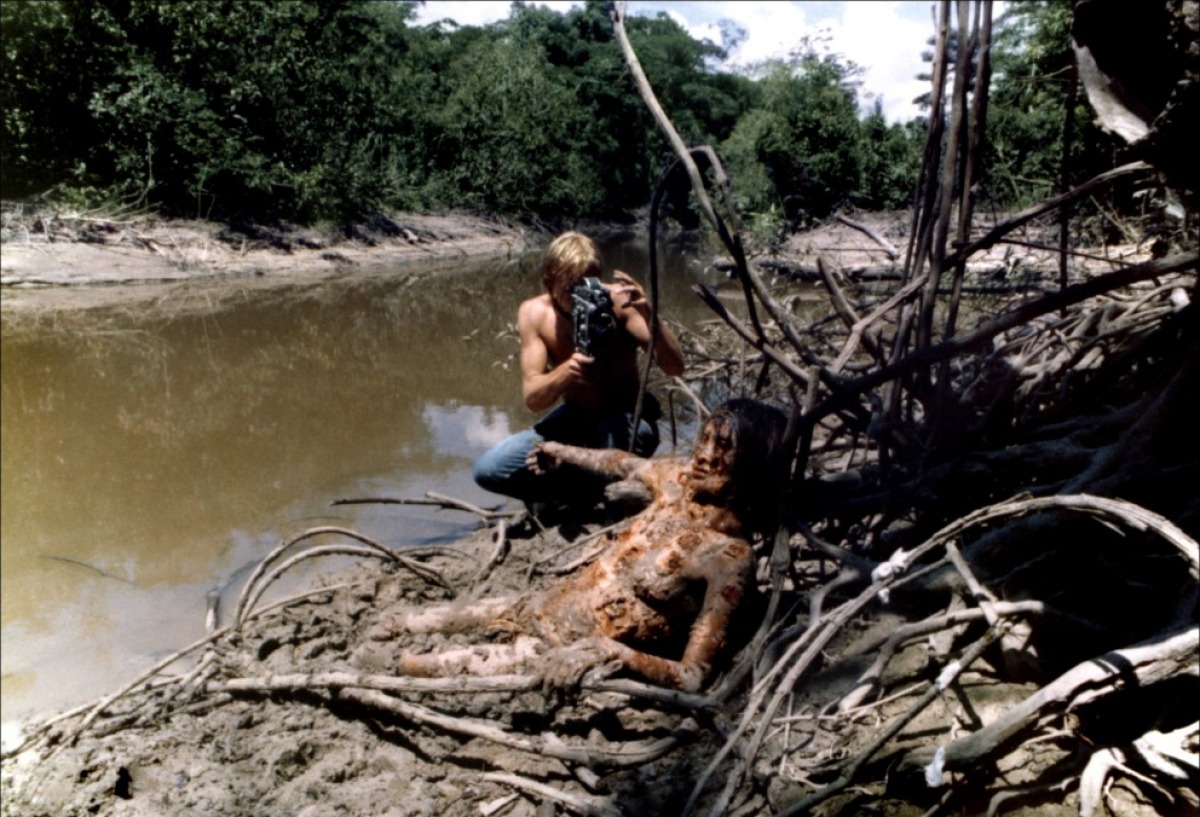
After taking a leave of absence midway through college to work on a failed indie horror film project, I returned to Emerson with a renewed vigor. In an attempt to expand my horizons and appease my parents’ suggestion, I took a “Wartime Journalism” class with the renowned Jerry Lanson...despite the fact that I never watch the news. I like horror onscreen, but I hate it in real life. That class, while amazing, underlined why I was not cut out for journalism. Thus I took the assignment of my final paper as an opportunity to explore my mind and rave about a favorite artist's misunderstood work of art, pastimes that I indulged in at least once a semester. For my Wartime Journalism class, the spotlight was on Ruggero Deodato's unbelievably controversial Cannibal Holocaust. I first saw this film in Summer 2001, after several years of avoidance based on its gruesome content and questionable reputation from both a cinematic and moral standpoint. Much to my shock and delight, I fell in love with the film that day in June. Much to my shock and horror, I relived its impact when the world changed that following September 11th. Barring Madonna and a handful of favorite (scripted) series, I have relentlessly avoided watching television ever since.


Robert E. Jeffrey 4/15/2005

JR485: Final Paper


     Outsider In: Looking at the

                      Psyche of the War Journalist 


I was first intrigued by the concept of wartime journalism in 2001 as a result of two significant works of filmmaking. The first, in the summer of 2001, was my viewing of a highly controversial, oft-banned 1979 Italian horror movie called Cannibal Holocaust, about the ill fate of a US network documentary team who travel the world staging or inciting bloody warfare and filming it to draw record ratings. The second was a documentary which aired on CNN shortly after the September 11th attacks, one which showed the public execution of an Afghan woman convicted of adultery  and the skinned bodies of enemies of the Taliban.

The atrocities in both films, one a satire of the American media and one an insight into life under the Taliban, were similar in tone and content. They also equally provoked my interest in disturbing questions about what should be filmed and broadcast for television, and about the true intentions of the filmmakers who cover the world we live in. At the time, I was angry at what I perceived to be exploitation of current events. In the wake of the impact that Cannibal Holocaust had on my cynicism and the impact that 9/11 had on my paranoiac tendencies, I initially suspected CNN was exploiting literal “snuff” footage for ratings in the wake of a national tragedy and an international panic. These two powerful films shaped my perception of wartime journalism, prompting a unique approach to this course that finally lead to my writing this paper.


Despite being someone with no interest in a career in journalism, I am amazed by how much the experience of journalists who voluntarily commit themselves to the ghoulish horrors of warfare--all for the sake of authentically capturing it through their own eyes--has influenced my artistic endeavors. This is not to suggest that the lifestyle of a wartime journalist (a profession I was admittedly unfamiliar with until recently) has ever guided the formation of my ideas. Rather, it is because the existence of this profession, and the nature of their daily lives, has offered a whole new perspective to me on the role of violence in the media.

When journalist David Filipov spoke before the class, I was emotionally enslaved to his presentation: laughing at some stories, recoiling in horror at others, and vicariously riding the adrenaline rush of his brushes with death. It was a fascinating journey to go on, as an audience member. But to actually experience it must leave an incalculably profound effect. I wondered if his memories weren't far less entertaining without the benefit of an engaged, but naive, audience: going back and forth between enemy sides in a foreign country, performing as an actor or comedian to protect your body and life, witnessing brutality and knowing that your lives and the lives of those around you could vanquish at any second. I tried to imagine going from that lifestyle to sitting at a desk at the Boston Globe. Those front-line atrocities must still seem more real, even more present, than anything happening around him in America possibly could. Having learned that he has two children, both of whose parents are working war journalists, I wondered what home life must be like: after stretches of domesticity, do he and his wife both feel a need to be back in the heat of combat? And does this affect the security of children longing for the protection of Mom and Dad?

Most parents would probably agree that David Filipov and his wife made the right decision in leaving that world behind. Recent international events have demonstrated that the mere thought of a war going on can bring about great anxiety in young children, even those who have no familial connection to it whatsoever. A 2004 article entitled “Controlling What News Your Child Sees From TV” on the memorial website 9-11 Heroes references a study by the Georgetown University Psychology Department on the effects of repeated news footage of the September 11th attacks on elementary school children. (9-11 Heroes) “Of the children in the study, 85 percent indicated that their basic sense of security and safety were shaken by the September 11 attacks.  Psychology Department Chair Deborah  Phillips reported afterwards that 'no one lost a family member…it was children not directly associated with the attacks, so I was surprised to find such high levels of stress. I expected maybe half, not 85 percent.'" (9-11 Heroes)

            These numbers merely refer to young children, with an inevitably limited understanding of the profundity of war but an innate fear of its deadly destruction. On the complete other end of the spectrum, the military and war journalists actually go to that proverbial “front line”, with many of them spending long stretches on the precarious road between a life removed from reality and a death lifted from gory nightmares. And what of their sanity? If children can be rocked to the core by repeatedly broadcast news footage of American skyscrapers tumbling into a city of people screaming in terror and distress (9-11 Heroes), could someone who sees such atrocities on a regular basis, for an extended period of time, possibly hold onto a sound mind?


As a writer of fiction, I was so affected by Mr. Filipov's classroom presentation that it prompted my decision to let the nature of this Wartime Journalism course shape a screenplay that I had been writing, one I already planned to incorporate into a separate class on the nature of violence in literature. This was compounded by the visit of Kevin Sites, who took a less dazzling, more analytical, and ultimately vulnerable approach to his experiences as a war journalist. He revealed that he had suffered the loss of a marriage and more than one engagement due to his commitment to his profession, and before the entire class he openly grappled with questions of what ethics to abide by in his career. It was very clearly an honest search for answers, rather than a demonstration of his career success. 
What most piqued my interest in learning about the profession of a war journalist was a desire to understand the psychological effect that “the news” has on the people who cover it. It seems that a lot of airtime and column space over the past two decades has been devoted to how children are affected when they see bloodshed on the six o’clock news, why teenagers run to slasher movies at the local multiplex, and what all this could mean when said young people enter the adult world. But it would appear, at least on a mainstream level, that less emphasis has been placed on the psyche of the people who broadcast such violence: the executives and editors and censors and newscasters who watch that bloody reality everyday and then decide on how they will break such truths to the rest of the world. At the heart of such mental and moral questions is the war journalist. Often a lone human being with modest protection and a questionable span of life, (s)he is willing to give up everything to potentially write the article or take the photograph that leaves a lasting impression on society. This passion, this monogamy, and this potential for horrible means of destruction has fascinated me since the beginning of the course, and it is what sent me off to at least scratch the surface of how a psychologist would look at the mind of a war journalist.


In 2004, The National Center for Post-Traumatic Stress Disorders (PTSD) released a fact sheet entitled “PTSD in Journalists” written by Dr. Elisa E. Bolton and containing new findings from studies on journalists that were conducted in 2002 and 2003. (Bolton) Dr. Bolton points out that “it has been assumed that journalists are not permanently impacted by death and destruction…[that they are] unusually tough, somehow immune to the reverberating impact of the human suffering they witness.” (Bolton) “Journalists are often exposed to highly stressful, traumatic situations, and required to bear witness to others who have been overwhelmed by traumatic events. While emergency workers have, particularly in the last decade, recognized the need for self-care and organizational safeguards, journalists may not yet have been recognized as potential candidates for employee safeguards and increased support.” (Dart Center “Self-Primer”)
Does the general public care about the minds and lives and fates of war journalists? It’s sad to say, but time and time again the masses seem more apt to be moved by the sight of a fallen soldier--perhaps because the image is unconsciously identified with the most heroic figure in the spectator's life--than by the brutal death of a captured war correspondent. “In recent years there has been growing recognition that being a journalist, especially a war correspondent, can be quite dangerous. In 2001 alone, 100 journalists were killed. Organizations and researchers are recognizing that in addition to the danger of death, journalists are exposed to the risk of great emotional distress. Yet, [recent research] also indicates that few employers of photojournalists recognize the stress and negative impact on mental health that is associated with some assignments. Even fewer employers offer counseling services and education about PTSD symptoms.” (Bolton)
            The irony is that education about what one should or should not do on the front line would not necessarily be put to use anyway. In The Psychology of War, Lawrence LeShan excerpts the reflections of a WWII veteran named William Manchester who was hospitalized in Okinawa but escaped so that he could rejoin his fellow marines on a dangerous mission that they were about to embark on. “It was an act of love. Those men on the line were my family, my home. I had to be with them, rather than let them die and me live with the knowledge that I might have saved them. Men, I now know, do not fight for flag or country, for the Marine Corps or glory or any other global abstraction. They fight for one another.” (LeShan 97)
While William Manchester was speaking as a veteran of combat, he could very well have been speaking as a wartime journalist. David Zucchino, a correspondent embedded with troops in Iraq, described his own experience as though he were a soldier, not a writer. “Peering through one of the Bradley’s three-inch-slits of bulletproof glass, I wasn’t just viewing the battlefield for a news story. I was searching for Iraqi fighters for the gunner to kill.” (Greer)


In War Is A Force That Gives Us Meaning, journalist Chris Hedges asserts that he  managed to retain his morality during his own wartime experience. However, referencing his time covering the first Gulf War, he concedes that, in the midst of the battlefield, a state of amorality is all too easy to sink into. “The prospect of war is exciting. Many young men [believe that they will] discover their worth as human beings in battle. The admiration…the glory…the ideal of nobility beckon[s] us forward. All the more startling [is that] that such fantasy is believed, given the impersonal slaughter of modern industrial warfare. Iraqi soldiers were nothing more on the screens of sophisticated artillery pieces than little dots scurrying around like ants—that is, until they were…reduced to scattered corpses….[by] high explosives fired from huge distances.” (Hedges 84)
Even in our advanced state of technology in the arena of mass murder, the human psyche has yet to be upgraded. It is just as vulnerable to emotional damage from firing today’s high-distance blasters as it was from impaling enemies face-to-face with bayonets a century ago. “Men in modern warfare are in service to technology. Many never actually see the people they are firing at nor those firing at them. To be sure, soldiers who kill innocents pay a tremendous personal, emotional, and spiritual price. But within the universe of total war, soldiers only have time to reflect later. By then these soldiers often have been discarded, left as broken men in a civilian society that does not understand them and does not want to understand them.” (Hedges 83, 86)
Even the most celebrated of wars—the  wars that carve out nations with the greatest of prospects, the wars that restore peace to troubled lands, the wars that literally save the world—the effects of violence prove immune to the glory of the soldiers who fight or to the journalists who cover their fighting. In War and Human Nature, Stephen Peter Rosen discusses the findings of a physiological survey conducted by the U.S. Army in the Spring of 1944. The first element discussed in the original review of the data was the stress level of all of the troops surveyed, which was related to “many factors, but among all of the factors, lack of sleep was cited more often than any other as a factor affecting combat performance”, with  troops citing few hours to sleep even during quiet times at war. (Rosen 110)
However, studies conducted in the 1960s on the effects of sleep deprivation as a stress-inducer lead to retrospective reanalysis of the WWII study, leading to the very possible conclusion that the WWII respondents were  hampered by fatigue and uncertainty moreso than lack of sleep. “Fatigue, the weariness that sets in after performing a task for long periods of time, has complex effects on human thinking and behavior. [In the 1960s studies], a particular kind of stressor—uncertainty—produced an entirely different reaction”. (Rosen 112-113).


Citing the actual test results, Rosen explains that the brain’s “corticosteroids are produced by conditions of novelty, strangeness or unfamiliarity—in which uncertainty is paramount. Unfamiliar situations produce feelings of uncertainty or anxiety which in turn trigger the secretion of cortisol. Cortisol levels are found to be particularly high in anxious or depressed patients.” (Rosen 113) But lest one think that journalists who covered WWII were spared such mental reverberations, Pulitzer Prize-winner Ernie Pyle’s recollections offer a startling account of the inescapable transformation. “Before he died in April 1945, war correspondent Ernie Pyle wrote, 'I’ve been immersed in it too long. My spirit is wobbly and my mind is confused. The hurt has become too great.' If this happens to you, seek counseling from a professional.” (Hight & Smyth, Chapter 4).
Much to my pleasant surprise, the Internet has given birth to a vital organization that was formed specifically to address the oft overlooked psychological needs of journalists who cover traumatic events. “The Dart Center for Journalism & Trauma is a global network of journalists, journalism educators, and health professionals dedicated to improving media coverage of trauma, conflict, and tragedy. The Center also addresses the consequences of such coverage for those working in journalism.” (DartCenter.org) Among the many resources available through their website is a “digital handbook”, Tragedies and Journalists: A Guide for Effective Coverage, by Joe Hight and Frank Smyth. In it, the authors take an empathetic approach to the daily lives and stresses of the modern journalist. “An exceptional thing about journalists is that we alone seem to think that we are exceptional in our reactions. Violence and its emotional aftermath affect all first responders, including police, fire, and ambulance workers as well as journalists.” (Hight & Smyth, Chapter 8).


In their message to journalists, Joe Hight and Frank Smyth integrate throughout each chapter the need for journalists to constantly communicate, to vent out what they see and how they feel in response—perhaps because, the authors suggest, journalists don’t do it enough. “A coffee shop or a bar may provide colleagues with an invaluable venue in which to talk and perhaps debrief each other about the emotions of their work. Recognizing the need for a debriefing forum or the opportunity to articulate emotions in the aftermath of a school-yard massacre or the World Trade Center attacks is not a sign of weakness, as too many journalists seem to think. Instead, when done successfully, debriefing fosters strength. The act of articulation — writing, drawing, painting, talking or crying — seems to change the way a traumatic memory is stored in the brain, as if it somehow moves the memory from one part of the hard drive to another. Journalists are people who, like almost everyone else who is exposed to pain, feel it whether it is theirs or not. Keeping it bottled up may only prolong its impact and make it worse in the future. Journalists, including free-lancers, should seek and take advantage of opportunities for both peer and professional counseling.” (Hight and Smyth, Chapter 8).
As a writer of films that explore the many facets of of sex and the nature of violence, I can relate to a journalist. I see the innate perversity of my screenwriting reflected in journalists' work in a very striking fashion: we both spend our hours penetrating a world of unspeakable depravity as a means of achieving career goals that feel less like signposts than they do missions, on which sanity and mortality is trivial compared to the work left behind. It is clear that journalists, as a group, are as dedicated to constantly expanding and improving upon their coverage as artists are dedicated to enhancing their body of work. Like artists, they are less interested in their safety--physical or mental--than they are in the final product, and they may be inclined to express their thoughts and fears through work rather than conversation. But clearly these related traits are dangerous, and unnecessarily so.
Journalists and artists communicate with the world on a profound level, putting passion and commitment towards work that stretches their emotional landscape. But raising their adrenaline by being exposed to ghastly horrors is as all-consuming in its destructive danger as it is inescapably thrilling. Wartime journalists are  prone to the same effects commonly associated with post-traumatic stress disorder in soldiers, and this is why they need just as many resources and just as much emotional support as an ER doctor or police officer. David Filipov and Kevin Sites have recognized this, and their respective classroom presentations served as a form of the catharsis that is vitally necessary in their profession. But that doesn’t mean that they won’t go back to the front line, because it doesn’t mean that they have grown immune to the euphoric excitement of their brilliantly deadly profession. Like artists, war journalists are passionate about living their lives doing what they love....even if life itself should end on the job. 


Works Cited

Hedges, Chris. War Is A Force That Gives Us Meaning.
Anchor Books, New York. 2003

LeShan, Lawrence. The Psychology of War.
            Helios Press, New York. 2002

Rosen, Stephen Peter. War and Human Nature.
            Princeton University Press, Oxford. 2005

Web Sources

Bolton, Dr. Elisa E. “PTSD In Journalists”. National Center for Post-Traumatic
Stress Disorder: Department of Veterans Affairs.

Greer, Jane. “War and Peace, Human Agency, and
Other Matters”. UUWorld.org

“Self-Care Primer”. DARTCenter.org

Hight, Joe, and Smyth, Frank. Tragedies and Journalists:
A Guide for Effective Coverage. DARTCenter.org

             
Mission Statement”. DartCenter.org


Film Referenced:

Cannibal Holocaust. Dir: Ruggero Deodato, 1979.
EC Entertainment DVD, Netherlands. 2001


Thursday, July 26, 2012

Olympian Goddess: Best Madonna Concert Ever?


I’m still coming down from the high of Madonna’s concert at The Olympia in Paris on July 26th, 2012, a day that will live on in history as one of Madonna’s most important contributions to the arts. In fact, I'm still stunned that it's over. 


Madonna's new single: the PERFECT opener to a PERFECT show!

The first half of the show was Madonna at her most human. There were minor glitches which I noticed but can’t remember, and a sense of “first time out” nervousness that typically arises on the opening night of any Madonna tour but which is usually absent from her most polished TV performances. I LOVED her speech to the audience, where she was at her most revealing in admitting that she doesn't actually want to create enemies. Madonna loves to stir it up onstage, but I don't think the human being offstage is nearly as confrontational when she's not holding a microphone. Then we were treated to that stunning "Justify My Love" interlude, which I am convinced was partly inspired by Behind The Green Door and which was exquisite in a club setting. Then, the black-and-white, filmed Madonna transitioned into the real woman for "Vogue", and without losing an ounce of Old Hollywood star quality. Madonna's look during this number in The MDNA Tour is my favorite Madonna look EVER, and seeing those famous eyes of Bette Davis staring at me from my screen when she sang "Bette Davis, we love you" was utterly thrilling. 


Nothing brings out my inner child quite like a STUNNING new rendition of "Vogue"!

At first I thought it was a condensed version of The MDNA Tour in an improved setting. I couldn't believe how much more audience-engaging these numbers seemed at The Olympia than they did in the stadium footage on YouTube, and I was positively ecstatic by how fueled Madonna was by the French audience when she performed that sizzling "Candy Shop"/"Erotica" number with Brahim Zaibat. Actually, I was kind of distracted by him--for a twenty four year old, he sure has a worldliness when he dances that matches her youthfulness. It makes their age difference non-existent, and their chemistry is overwhelming. I expected her to segue into "Like A Virgin", but then she blew my mind by giving us all the performance of "Beautiful Killer" we'd been waiting for--AND THEN SOME! My mind was slightly cluttered by all the potential UK & US tabloid headlines about Madonna's insensitivity in putting guns in her show. In fact, I hate to admit that imagining uninformed TV pundits claiming she was using last week's tragedy to stir up controversy nearly blotted out the music I was hearing and loving. Thankfully those screaming fans in Paris and that Goddess on the stage distracted me from all that. Like she said, the enemy is within, and Madonna kicked its ass. When she sang“Je t'aime… moi non plus”, I thought I might die: it was as though she was performing a duet with the spirit of Serge Gainsbourg, and gave one of the best acting performances of her career. When that number ended, I was preparing for her to return with "Like A Prayer" or "Celebration", assuming the show would end as the tour does. When it didn't, I was even MORE stunned by the last two songs--bravo to my favorite living artist for leaving those last images burned into our mind like the final frames of a great (FRENCH) movie. 


The 9-minute, 2-song finale: among the greatest highlights of Madonna's entire career.

Madonna has promoted her new music with club gigs since 1998’s Ray of Light prompted that legendary 2:30 AM mini-concert at The Roxy in New York, and since 2000’s Music she’s streamed many of these club gigs on AOL or MSN. Her MDNA mini-concert streamed on YouTube and marked the first time that such a performance came four months after the release of the related album and two months after the launch of a world tour. It was a truly unprecedented gig akin to her 2005 hints at having The Confessions Tour accompanied by club appearances around the USA.  Staging The Olympia Show after The MDNA Tour has already become enmeshed in her career history underlined the widely held opinion that Madonna’s performances definitely work best in small venues. Six of the greatest hours of my life were spent seeing Madonna in stadiums, and I’m certainly not suggesting that her arena and stadium shows are somehow inferior to what we all just saw at The Olympia. But there’s no denying that the innate theatricality of everything Madonna does, especially when she’s holding a microphone, is best appreciated the closer you are to her.


The 2012 re-invention of "Open Your Heart" plays BEAUTIFULLY in a smaller venue!

In light of recent events in Colorado, I’m inclined to think Madonna’s performances of “Beautiful Killer/Die Another Day” and “Je t'aime… moi non plus” will be controversial for a few weeks. But I’m more certain that they will go on to be remembered among the finest performances of her career. Future Madonna fans won’t be caring about how many records MDNA sold--or, I should sadly say, didn't sell. They’ll just wish they could turn the clock back and see the show that we all just saw when it was live and current and being watched by fans all around the world all at the same time. When I was screaming and jumping in my living room as loud and as high as the crowds in France, I was not the only one involuntarily putting on a separate show entirely. In fact, there were probably screaming complaints in every major city during those glorious minutes when Madonna refused to let the media terrorists win by giving the performance of "Beautiful Killer" that every fan has been dreaming of. “American Life” could have hurt Madonna’s career if the wildly violent and utterly brilliant original video had been broadcast. But I refuse to believe it would have done any more damage than what was done when she pulled it, in turn disappointing a number of fans who look to her to be ever-defiant. I truly believe she did this to protect her then-husband’s career more than her own. Without that concern at The Olympia, she could be as audacious and brilliant as we wanted her to be. And boy, was she EVER.


"BEAUTIFUL KILLER": The Madonnarama edit of Madonna's CLASSIC number!


Addendum, 07/28/12: 

Well, it turned out to be controversial.....but not for the reasons I expected. I won't link to footage that's all over YouTube of fans hurling obscenities and empty water bottles onstage after the show ended. I sympathize with fans who paid close to $400 for tickets without realizing they were only getting a fifty minute show, especially as I'm STILL saving up my pennies for Madonna's upcoming tour stop in Boston this September. I'll comment on that infamous audience reaction in an upcoming post closer to Madonna Day 2012, but for now I'll leave you with the final performance of the show. I hope this isn't pulled from YouTube any time soon, because I think it's one of Madonna's finest hours. I don't consider Madonna "The Queen of Pop" because of all the money she's made or the records she broke in the process. I consider her "The Queen"--we can drop the "of Pop" bit in RobWorld--because she is not only capable of creating great works of art but also of creating great works of FUN. I have watched this over and over because it is as ridiculously entertaining as it is mentally stimulating. It's more like the final scene of the movie that I have always dreamed Madonna and Dario Argento would make together, not the closing number of one of her concerts. It certainly put the French audience over the edge--no wonder they were so inclined to riot! I'm well aware that I am A.) biased and B.) don't have money to throw around, but I'm still inclined to believe these 4.5 minutes alone were worth the price of admission.


Madonnarama's edit of Madonna's unbelievable take on "Je t'aime...moi non plus"


07/29/12 UpdateMadonna's response to her legendary night at l'Olympia.* (I know I'm not the only one who thinks Marine Le Pen played a role in this...) 

*Thank you GangsterSaysRelax!!

08/06/12 Double Update

1.) Madonna speaking to her fans to address the l'Olympia controversy when she brought The MDNA Tour to Vienna several days after the Paris club show. 


2.) The full-length show is finally BACK ON YOUTUBE in an HD "Director's Cut" version that has been personally approved by Madonna!!


(Psst! You can also download the whole performance thanks to Madonnarama!;)