Now that this blog has been given its third and final (I swear!!) name, I thought I would shake things up a bit. Nothing so crazy as dropping the pink text color or updating the general appearance to a post-1997 look, of course. But there's a lot I've been wanting to say, so rather than post a succession of lengthy blog posts, I thought I'd post this variety pack of short ones.
The Twentieth Anniversary of My Obsession With Anniversaries
The hits package that redefined my life. Like, seriously!
January '14 marked the 20th anniversary of my obsession with anniversaries. My first-time viewings of Starman, The Shining, Dawn of the Dead, and Working Girl on blistery and/or snowy Friday nights in January '94 mobilized in me a 1980s nostalgia that never went away. But it wasn't just the movies I watched that month, it was also buying THE album: Totally 80s, the 2-CD Razor & Tie compilation that was advertised on TV all the time before becoming the soundtrack to most of my life in the sixth grade. From 1994 on I was fetishizing every aspect of '80s pop culture while lambasting everything I could about the '90s. However, happy Friday nights ritualistically spent at the local multiplex limited my aptness for thrashing then-contemporary film.
It is now a time capsule for what the world looked like in March '94,
but The Paper also remains grown-up Hollywood fare at its most brilliantly entertaining.
For the Class of 2000, 1994 was the year when the sixth grade ended and the seventh grade began. Thus the year closed with my being knee deep in adolescent angst, which only kept me going back into the past. I continually found myself disappointed by reality, so I was constantly choosing fantasies that were constructed in another era. My pre-pubescent childhood had been so happy, and the spirit of the '80s was so inextricably linked to my own soul, that I lamented the decade until it became an over-idealized Heaven that I dreamed of dying and going back to. I was not unaware of this being unhealthy, but that didn't make it any less painful to push forward, not when I discovered that being a teenager was to be a lot less pleasant than I had been imagining in the '80s. Instead of forging a new path that would make childhood dreams come true, I clung to the past as an escape while reality came crashing down in the present. And, for better or for worse, I've been inclined to do this ever since.
I related to Tess McGill when I was twelve. I still do now.
And I'll bet many of you reading this feel the exact same way.
A Sorta-Facade On The Verge of Sorta-Crumbling
There has been so much that I have wanted to communicate through this blog over the last fifteen months, but during said fifteen months my life has been in a major state of upheaval. Actually, it was in upheaval when I started this blog back in 2011. But way back then, things in my life were just starting to turn upside down, and the coinciding mini-phenomenon of “Vogue Boy” allowed me to escape reality like never before. For a moment in Summer '11, it felt like my dreams of being an artist and a star had been instantly realized when that video achieved its peak popularity in one weekend. It was during that delightfully manic moment that I quickly decided to become a blogger, and my early entries here are thus defined by an optimism, and even a sense of fulfillment, that apparently represents me at my purest.
The-blog-formerly-known-as-RobWorld has been a tremendous outlet in the three years since since then, for it has allowed me to unlock and release parts of myself through the written word in a way that I could never do within the format of a screenplay. But for well over a year, I have not been inclined to do any unlocking or releasing, for I have discovered that my life experiences are a lot less vivid in my mind after I make them public here. And, as evidenced in past entries, my memories, and the role they play in shaping my creative output, are too precious to me to be sacrificed.
On some level, I've gotten more screenwriting done by not blogging. But on most levels it has denied me an outlet that I need: not only to write, but to be read. I might not have a huge readership on here, but the feedback I've received in personal messages has been too awesome to be ignored. There is no better feeling than knowing a handful of people were affected by work that they personally related to, or which made them look at a movie or a person or a similar life experience in a new light. I don’t know if I’ll start writing again more regularly, because I thought that that would be the case last November....and it wasn’t. But I think this has a lot to do with my wanting to make every post an event, in turn defeating the purpose that this blog serves, for me, in the first place. I am a hopeless neurotic, still in the middle of a challenging and annoyingly long life chapter, and I need a place to let all this shit out. Some people go to therapy. I go to the stage. And that’s exactly what this blog is to me.
From Sixteen To Thirty-Two: "The 2014 Project"
Like the film itself, I'll NEVER forget the first time I saw this trailer!
When I was sixteen, I realized that Wes Craven's Scream was released exactly eighteen years after John Carpenter's Halloween, which itself had been released exactly eighteen years after Alfred Hitchcock's Psycho. Years later, I would realize that Val Lewton and Jacque Tourneur's Cat People’s limited release in December 1942 meant it was the movie that launched this every-eighteen-years cycle. Since then, I’ve been anticipating "The 2014 Project", a film that would, like the aforementioned four films, inject the horror-viewing experience with enough wit and suspense to change the cinematic landscape and redefine the genre for another two decades.
The most bewitching of Hollywood films and
possibly the most influential horror movie ever made.
Since the late '90s, I have secretly hoped that the Universe would see fit to choose me to write this 2014 horror film, and much of my creative life has been spent preparing myself to be worthy of such an opportunity. Alas, I've proven far more adept at writing screenplays than actually getting them made into movies. And without ever seeing your work on some screen, one can hardly feel like a real screenwriter. So last year I attempted to put work of which I remain as proud as ever temporarily behind me, and to instead take a stab at crafting "The 2014 Project". I spent the entirety of 2013 working on eight different scripts, each of which I had hoped could potentially reinvent "the American horror film", but none of which ever made it to their respective finish lines. By New Year’s Eve, I was forced to admit defeat. I was proud of the work I had done, and confident that one day the characters and story elements from this arsenal of partial completion would find their way into my future projects. But by no means did I come close to striking the gold that I was digging for.
If every attempt at crafting a pure suspense picture was even half
as effective as Halloween, the world would be a much better place.
It was not until the very end of 2013 and the very beginning of 2014 that a burst of renewed inspiration and ambition (my favorite cocktail) launched me on a new path. My dream, in this easy-to-shoot-but-hard-to-distribute world of modern indie filmmaking, was that the work flowing out of me would find its way into the right hands, and a quickly-realized project (Cat People, Psycho, Halloween, and Scream were themselves low-cost/high-speed shoots) could theoretically find its way onto a VOD platform or into an early 2015 film festival. But nearly a third of the way into 2014, I'm inclined to believe that that dream will not come true....and I'm okay with that. It’s very likely that a great horror film will come along and make the impact I was hoping to make while I'm still pining away, and if that happens, I can finally say I was right all along. And hopefully, if that happens, 'my little horror film', whenever it makes its way to the screen, will still earn itself a place in the hearts of like-minded movie lovers. But for now, I think I'll put my faith in "The 2032 Project": I have good reason to believe I might be capable of writing something worthy of comparison to the aforementioned films when I'm fifty. In the meantime, I intend to enjoy the writing process instead of mourning my failure to be where I thought I would be when I was half the age that I am right now.
No movie-going experience has come close to the first two times I saw Scream on the big screen. And I'm 99.44% sure that this will always be the case.
Furthermore, assuming that the every-eighteen-years cycle really does extend into this century, I'll be keeping my eyes peeled for the film that will ultimately redefine our collective concept of modern horror movies. There are already a few potential contenders in the pipeline, and 2014 has only just begun...
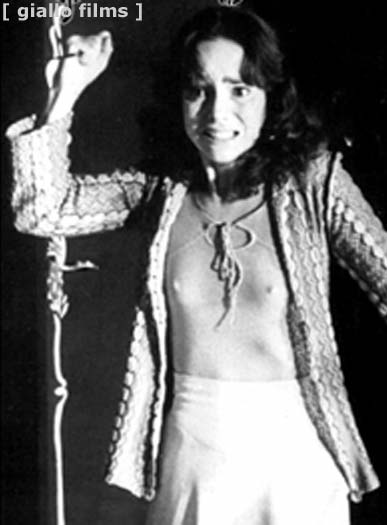
Today marks thirty-five years since Dario Argento's Suspiria was released in the United States. It remains his most internationally lucrative and critically acclaimed film, despite or because of being a thematic and stylistic departure from the 'giallo' films that have made Dario Argento a filmmaking legend. I have written before about the role that Suspiria played in my life at the end of high school. This piece marks the last time that I wrote about it in college.
This was originally my final assignment for a class at
Emerson College that explored portrayals of the occult throughout cinematic history. The class was taught by Peg Aloi, the writer and film critic and my favorite professor. It was the summer of 2005, and I was working on an occult horror screenplay. In the midst of doing lots of research
for my own project, I took the class to expand knowledge for
my work and to introduce what I was finding to Professor Aloi and my
fellow students. Dario Argento’s Suspiria, one of my favorite movies of all
time, was part of the curriculum. But one particularly fascinating piece of
television history that I uncovered that summer was a 1989 broadcast of The
Oprah Winfrey Show that the class watched on the last day. It was about a horrific tragedy: the brutal murder
of Mark Kilroy, a young man on spring break in Mexico. The coverage in 1989,
however, suggested his death was the work of a global network of devil worshippers. In 2005, and particularly to a room full of Emerson College
students, the tone of the broadcast took on an amusing quality despite the
humorless subject matter. The part that seemed amusing was the “Satanic Panic” that
swept the nation in the 80s, and how dated it was two decades later. But I remember when those fears were too embedded in mainstream society to evoke laughs. Childhood memories of that disturbing cultural phenomenon were at the
root of both my screenplay and this essay.
Robert E. Jeffrey
MA405: Final Paper
Suspiria: Paving the Way for Hysteria
When Suspiria was unleashed upon American
audiences by 20th Century Fox in 1977, few could have predicted the
success enjoyed by its distributors or by famed Italian horror director Dario
Argento. At this point in time, Argento’s American success was distinctly
limited: he had had two U.S. successes in his 1970 debut thriller The Bird With the Crystal Plumage and 1975’s Profondo Rosso,
released in the U.S. as The Deep Red
Hatchet Murders. Both films were blockbusters in his native Italy. Additionally he had two other hit European thrillers and a successful Italian anthology show, all of which contributed to his budding European
reputation as “the Italian Hitchcock”. The release of 1977’s Suspiria marked a major turning point in
Argento’s career, and the change in direction proved enormously profitable. Suspiria was a massive success in
Europe, and became the first of a string of big hits for Dario Argento in Japan—preceding a 1978 re-release of his Profondo Rosso under
the title Suspiria 2! (Jones, "An Eye For Horror")
Following the huge
success of Twentieth Century Fox's The Omenin 1976, the
internationally lucrative Suspiria must have seemed
like a sure bet for a the studio to continue capitalizing on American
moviegoers’ fear of a Satanic influence over our everyday lives.
Indeed, Suspiria would go on to
become Dario Argento’s most widely released, heavily publicized, critically
acclaimed, and commercially successful film in the United States.
The first film in a planned trilogy, Fox was so pleased with Suspiria’s grosses that they co-financed the lavish sequel. Filmed in 1979 and released in a few international
territories in 1980, Dario Argento’s Infernowould be put on the backburner at Fox amidst a change of studio heads in
1980, making a limited theatrical appearance in the mid-1980s before quietly sliding
onto video shelves under Fox’s “Key Video” label. (Jones)
If the more densely scripted Inferno had been
given a proper U.S.
theatrical release by Fox in 1980, it could very well have echoed the success
of Suspiria, in addition to enlightening viewers to the actual meaning of the themes and content of Suspiria. Inferno reveals that the mythology of its predecessoractually had little to do with Christianity's image of 'the Devil'. But the misconceptions
inevitably taken from Suspiria’s limited narrative have come to define how most viewers will interpret it: as an artfully crafted horror movie about “witchcraft-as-Satanism”. Part
of the success of Suspiria was in
hinting at the existence of Satanic cults embedded in the least conspicuous pockets of society, a fear that had heightened considerably since the release of Roman Polanski's Rosemary’s Babyin 1968. In the that followed Suspiria, that fear would
heighten in the United States, manifesting itself in a new yet frighteningly familiar way in the American cultural landscape.
In the ten years following the
release of Suspiria, America’s interest in the occult in
the 1970s turned into a fear of the occult in the 1980s. There could have been
any number of reasons for this rapid turnaround. Many would credit the two-term
run of conservative President Ronald Reagan and the emergence of “the religious Right”.
Once could cite a collective parental/generational response, triggered by the bloodshed dominating movie theaters packed with teenagers or the popularity of heavy metal music, condemned by parents’ groups for its supposed references to blood, murder, and the
Devil himself. I would argue that these factors merely
strengthened the pull on the collective American psyche of fears already planted by paranoiac films of the 1970s--most especially Rosemary’s Baby, The Exorcist,
and The Omen. Despite being a success, Dario
Argento’s Suspiria was never as widely viewed in America
as the aforementioned three films. Nonetheless, I would argue that Suspiria, more than any other 70s occult
horror film, set the standard of primal terror that would fuel what historians generally refer to as the “Satanic Panic” of the 1980s.
Although the roots of the 'Satanic Panic' began with the dozens of reports of ritualized child molestations going on at daycare centers across the country, the origin of the brand of “panic”
that I associate with Dario Argento’s vision was galvanized, if not born, in
the small town of Northport, Long
Island. There, in the summer of 1984, seventeen year old Ricky Kasso and his friend Jimmy Troiano were arrested for the horrific stabbing death of their classmate, Gary Lauwers. Although the crime was primarily
related to use of the hard drug PCP, Ricky Kasso’s interest in the Devil, as
manifested in “black metal” music, became a paramount issue in the case. Says
then-and-current Newport
police chief Bob Howard, “The press release alluded to the "Satanic cult”.
A Satanic cult never existed. There was some misinformation that went out. But
you can't stop the press. The press release that went out caused a frenzy which
I've never seen or have seen since” (“Satan in the Suburbs”).
Perhaps the most horrific and defining cult murder of the
Satanic Panic scare was the murder of Texas college student Mark Kilroy, and the
discovery of his and twelve other dismembered corpses in a mass grave in Matamoros, Mexico. Kilroy was kidnapped on
spring break in 1989 and brutally tortured and murdered by a drug
lord cum "black magic" practitioner Adolfo de Jesus Constanzo and his
followers/crime partners, all as a means of magically attaining protection and immunity from
police and fellow drug traffickers. Although Constanzo's practice came from a
family tradition of an extreme interpretation of the Palo Mayombe
"voodoo" tradition, early reports, naturally, claimed Satanism (Newton).
One of the most defining time capsules of this era was
a historically relevant broadcast of "The Oprah Winfrey Show" on
May 1, 1989, in
which Winfrey interviews one guest in particular would become infamous among
critics of the controversial "Satanic Ritual Abuse" syndrome. That
“anti-Satanist” would be Patricia Pulling, best known as the founder of B.A.D.D.,
“Bothered About Dungeons and Dragons”, which she formed in response to the
tragic suicide of her son, an event she blamed on the deadly occult influence
of the Dungeons and Dragons role-playing game. (Stackpole)
On
the broadcast, Pulling offered a list of “warning signs” for parents of children
susceptible to becoming involved in Satanic acts.
In teenagers you look for obsessive behavior in some heavy
metal music, not all. Obsessive behavior of kids that like gory slasher films:
Poltergeist type films, Friday the 13th. If they have an obsession
with this, an obsession with evil, if you start to see the signs and symbols of
things that you don't recognize..... if the child actually hates
God....drawing pictures of death, dying, dismemberment mutilation....this is
sick, and they need help. A lot of professionals are passing this off as a fad
they will pass through. and many of them are not passing through. Many are
dying, and killing other people. (“Oprah”)
[Patricia Pulling] has, willfully or
negligently, manufactured reports concerning suicides and murders related to
games and Satanism. She has promoted individuals who are, at the very least, in
need of serious psychiatric help to deal with their emotional and psychological
problems. She has repeatedly represented herself as an “expert witness”
concerning games of which she knows little or nothing. Pat Pulling and her
allies regularly conduct “cult crime seminars” at locations across the country.
They are offered for police and teachers at between $100 and $300 a head, [and]
the anti-Satanists profit greatly from giving the seminars. These are the
seminars in which Pat Pulling distributes a questionnaire that, if used in
accordance with the instructions, will prove virtually anyone to be a Satanist.
These are the seminars at which “occult symbol” hand-outs are distributed,
including things like “the Star of David” and at which any non-Christian
religion is branded “Satanism.”
Many supposed victims of Satanic ritual abuse are widely believed to be likely candidates for childhood sexual abuse, occurring at a time when the human imagination is running so rampant that the abuse may have stored
itself in the victims’ subconscious under the guise of being a Satanic rite
(Holmes 3). This theory is prefaced in Suspiria by the character of Dr.
Mandel (Udo Kier) when he addresses the disappearance of Sara (Stefania Cassini) and her
hysterical beliefs in a witch cult hunting her down.
“She had a nervous breakdown after her mother's death and
she came to me for treatment. After she got better again, we remained friends.
But lately she was upset about some notions put into her head by a friend
of hers. They were kind of wild ideas. She had discovered that the Tanz
Akademie was founded in 1895 by a certain Helena Markos, a Greek immigrant, and
that the local people believed her to be a witch. That really got Sarah's
imagination going. Madame Markos died in a fire. That's all there is as far as
witchcraft is concerned. The school was taken over by her favorite pupil, the
study of the occult was abandoned, and soon the place became the famous dance
academy....As a believer in the material world and a psychologist to boot, I'm
convinced that the current spread of belief in magic and the occult is part of
mental illness. Bad luck isn't brought by broken mirrors, but by broken minds.”
Although “mental illness” might be
an overstated response to the cultural interest in the occult during the 1970s,
Dr. Mandel hits on a very potent point about the time period: people were looking for something
to scapegoat. Associating ill fate with the Devil was recognized as
“medieval thinking” throughout the progressively modernized 20th century, but in
the wake of Rosemary’s Baby and, even more
so, The Exorcist, belief in the
existence of Satan and, more tellingly, his role on Earth, was becoming increasingly popular in the mainstream American culture. This was particularly evident throughout the
1980s as evidenced by books and TV specials on the subject
and a revolving cast of authors and frequent TV/radio guests making frequent media appearances during the so-called Satanic Panic. The common fear of witchcraft in the 1980s was prophetically illustrated in Suspiria by the character of
Professor Milius (Rudolf Schundler) when he describes to the protagonist, Suzy (Jessica Harper), what he learned from writing his defining book, Paranoia and Magic.
[Witches] are malefic. Negative and destructive.
Their knowledge of the art of the occult brings them tremendous powers. They
can change the course of events, and people's lives. But only to do harm. Their
goal is to accumulate great personal wealth, but that can only be achieved by
injury to others. They can cause suffering, sickness, and even the death of
those that, for whatever reason, have offended them. A woman becomes queen of her
coven if her magic is 100 times more powerful than the rest of the coven,
which is like a serpent. Its strength rests with its leader, which is likes it
head. A coven deprived of its leader is like a headless cobra: harmless.
Skepticism is the natural reaction of people today, but magic is ever present.
Magic is everywhere, and all over the world, it's a recognized fact, always.
Patricia Pulling could not have said it any better herself. Indeed, this defining exchange is the most blatant misrepresentation of witchcraft-as-Satanism in the entire film. But a more careful deconstruction of this classic scene—specifically, with the aid of Argento’s view of the Suzy character—offers a very different interpretation. “[Suzy] does not know she is a white witch, but she has a great strength that drives back everything. Indeed, when she meets the professor it is the moment in which she begins to realize. She can fight because of her strength” (Locane, “Dark Dreams”). Of course, it would be virtually impossible to decipher this from what seems a straightforward condemnation of witchcraft in any form.
Prior to 1977, serious Satanic horror in America was
generally packaged for TV (Look What's Happened to Rosemary's Baby,The Devil's Daughter), EuroHorror imports (The Antichrist, The Devil's Nightmare, To the Devil....a Daughter), hardcore
porn (The Devil in Miss Jones, Through the Looking Glass), and, most commonly, prime drive-in meat (Race the Devil, The Brotherhood of Satan). Satanic horror films that came in the wake of Rosemary's Baby typically aimed to be frightening in a campy, cathartic, "fun time at the movies" manner, employing tried-and-true horror techniques. Dario Argento's Suspiria demonstrates a more diverse array of genre influences: the warped world of German Expressionism, the gothic chills of
silent American horror, and the subtly insidious anti-witch scares of Victor Fleming's The Wizard of Oz and Walt Disney's Snow White and the Seven Dwarfs (“Suspiria
25”, Jones 83). Ultimately, I
would argue that the very effectiveness of Suspiria is why it serves as an
inevitable precursor to the Satanic Panic. The film exists on a primal level, affects on a primal level, and stays with the viewer on a primal level. When looking back on Suspiria, one consciously remembers the striking barrage of jarring sound and vivid color even more than the prevalent element of witchcraft. As such, one could be
frightened by ideas presented in the film years later, with no specific
recollection as to where such fears originate from.
Michael Brandon,
star of Argento’s 1973 thriller Four Flies on Grey Velvet, shared with UK viewers of the Channel 4
documentary Dario Argento: An Eye For Horrora very specific insight into Argento’s creative process as a
screenwriter. “Dario told me he has dreams, or
nightmares, and that's how the story comes into being. He would write down the
nightmare. And it would become the script.” (“Eye for Horror”) In Suspiria, the
nightmare world explored by Suzy Banyon may very well have echoed Argento’s own
investigations into the world of magic in preparation for Suspiria. During
this time, he and wife/co-writer Daria Nicolodi traveled throughout the “Magic
Triangle”, a (supposedly) supernaturally active point where France, Germany, and
Switzerland meet (“Suspiria: 25th Anniversary”), and met with
many Pagans as well as alleged worshippers of the Devil (Jones 72). Says the
couple’s daughter, international star Asia Argento, “he
needs somebody, a feminine character, to represent his curiosity--of life, and
danger, and all those things”. ("Eye For Horror")
Dario Argento grew up and achieved success in the most Catholicized nation in the world. Could he have been, perhaps subconsciously,
combatting his own innermost fears about the world of witchcraft, a world that at
once utterly fascinated and completely terrified him? Pop-rock extraordinaire
Keith Emerson, who composed the score to Inferno,
has offered that “Dario was probably more scared of the films that he made than
his audience was. I've seen the guy just shaking watching his own film” (“Eye
for Horror”). American horror legend John Carpenter, a friend and colleague of
Dario’s, points out “the story he tells over and over again” as the foundation
of Argento’s fear of the unknown. “There was a hallway at the back of his
house, and when he had to go to sleep at night, for whatever reason, when he
would walk there, he would imagine these things behind the doorways in this
hallway. By the time he got to his room he was in complete terror” (“Eye for
Horror”). Another genre titan, George A. Romero, puts in his own take on how these fears are passed on to audiences around the globe, infecting
the world with manifested realities of Argento's private nightmares. “I think when
Dario gets an idea he is basically trying to communicate either a kind of
horror or an allegory about certain human behavior. He's like Van Gogh, someone who says this is the
way I want it to be, and this is the world. Take from it what you will” (“Eye
for Horror”). As the Satanic Panic stormed through the American 80s, it was
clear that the country had taken Argento’s view of the world very literally
indeed.
WORKS CITED
Holmes, Dr. Leonard. “What the Hell is Satanic Ritual
Abuse”. About.com
What better way to celebrate the first day of the 2012
Cannes Film Festival than with a flashback?
In May 1973, The Mitchell Brothers’Behind The Green Door became the very first American pornographic
film to compete for the Palme D’Or. John Hubner’s 1993 book Bottom Feeders, written about Jim and Artie Mitchell, confirms that
being an official selection at the 1973 Cannes Film Festival was the ultimate
validation of The Mitchell Brothers’ artistic ambitions. The film was greeted
with thunderous applause at the first screening, and the crowd went even wilder
when leading lady Marilyn Chambers responded by giving a speech in French. Behind The Green Door, already a commercial and cultural phenomenon in America, went on to become a sensation at the Cannes
Film Festival.
In May 2002, I wrote about Behind The Green Door for my final paper for one
of four classes I took with my favorite professor at Emerson College, writer
Peg Aloi. It was during that semester that my first viewing of Gerard Damiano’s
Deep Throatsparked a life-changing
fascination with the ‘porno chic’ movement in American cinema. This enthusiastic
appreciation of classic straight porn has always left people confused, but I
hope that my favorite essay from college explains why every movie lover should mourn for The Golden Age of Adult Films.
Robert Jeffrey
Media Criticism and Theory: Final Assignment
Feminist Porn? A Look Back Behind
the Green Door
If film is an emotional medium,
then by definition alone adult cinema could be the highest plateau of movies;
no other genre has ever managed to spark such extreme reactions among the
masses, nor can any kind of film equal its emotional/physical effect on the
individual watching such a film. Adult titles often retail for much higher
prices than conventional videotapes and DVDs, and yet they often prove to be
bestsellers, for people are willing to pay enormous sums of money for the
effect that they arouse within the viewer.
However, because the genre is so
adept at provoking and exciting the viewer, filmmakers often take the power of
the medium for granted. Technical merits and artistic aspirations are far too
often neglected in favor of letting the “onscreen action” work for itself. The
adult film industry had been given new life when Deep Throat, an X-rated
sex comedyreleased in late 1972, became a box office phenomenon that
played for years to packed audiences in mainstream cinemas as well as adult
theaters. This led to a so-called “porno chic” movement throughout the 1970s
and into the 1980s, during which numerous adult films were booked into major
theaters, reviewed by mainstream film critics, and enjoyed considerable box
office success to rival the profits of Hollywood
films.
In her revealing audio commentary accompanying
the 1980 film Insatiable, Gloria Leonard, former adult film star and
President of the Free Speech Coalition, noted that this was what made the adult
films of the 1970s and early 1980s so unique. What once had been a sleazy
underground genre made of short, technically inconsequential “stag films” rose
up to the erotic feature films that played to widespread-and often
mainstream-audiences. These films were shot on film, had linear storylines, and
boasted stars that were as ambitious at becoming well-regarded actors as they
were at shedding their inhibitions to engage in onscreen sexual activity. With
the advent of video production, however, the genre once again slid into its
less inspired roots, leading to today’s market of meaningless sex, cheap
videography, and virtually absent emphasis on plot or performance
(“Insatiable”).
In 2000, British film critic Derek
Malcolm of The Guardian caused quite a stir with his list of the Top 100
Movies of the 20th Century. Malcolm described it as a list of “not
the 100 best, [but] 100 of the best…personal favorites which, I hope, I have
good reason to celebrate”. This cinematic ranking was particularly unique and
provocative because it omitted a good number of films that are generally
guaranteed a high perch on the filmic totem pole. Among these would be Metropolis,
Citizen Kane, It’s a Wonderful Life, The Searchers, La Dolce Vida, The
Godfather, and Annie Hall (Malcolm “Century of Films”).In an
article published in early 2001, several renowned film critics from the world
assessed their feelings on Malcolm’s list. Some critics applauded him for his
selections, particularly his more offbeat inclusions and exclusions. French
critic Jean Roy, of “L’Humanite”, praised his “preference for style over stars,
and for films which deserve to be reminded over crowd pleasers”, while German
critic Klause Eder encouraged readers to “see his favorites and you know how
exciting cinema can be”. However, the most revealing and representative
comment-and the one on which I am essentially basing my ensuing
reflections-came from Peter Keough, of the Boston Phoenix: “You’ve got to
admire a 100 best movie list that omits Citizen Kane but includes Behind
the Green Door” (Malcolm “What the Critics Say” 2-3).
The 1972 film Behind the Green
Door was directed by “The Mitchell Brothers”, a collective dub for San Francisco adult
filmmakers Jim and Artie Mitchell. Behind the Green Door was more than a
movie. It was a phenomenon, and one that helped-perhaps more so than any other
film of its time-to revolutionize the adult film industry. “Serious critics
reviewed the film, while it raced up the list of the most popular movies as if
nothing untoward were happening at all” (Malcolm “Behind the Green Door”, 2).
“One of the most popular and recognized adult classic titles of all time”
(Spooky 1), the low budget production went on to gross $100 million worldwide,
making it one of the most profitable films of the 1970s (Adult DVD Reviews 3).
The story is so simple that it’s star has
often described it one sentence, but for the sake of an understanding of the
film’s effectiveness, I’ll offer a few more words than that. Gloria (Marilyn
Chambers, in her debut leading role) is an exquisitely beautiful young woman
staying alone in a somewhat secluded hotel. One evening she leaves the hotel,
extremely well coiffed as if attending a formal date, and is abducted by two
masked men. She is taken to the backroom of an isolated location, which we soon
learn is a theater-cum-sex club, where an older woman comforts her, massages
her, and tells her to prepare to embrace “the most exquisite moment” of her
life. Gloria soon finds herself walking into the elaborate sex club (from
“behind the green door”), onto a stage where she is surrounded by beautiful,
caped women, and in front of an audience composed of upper class couples
comprising a variety of sexual orientations, body types, ages, and ethnic
groups. What happens throughout the rest of the film is a bizarre, garish,
gorgeously photographed and almost overwhelmingly erotic chain of sexual
events, occurring both on stage and within the audience.
Contemporary porn films show sex.
They do not “deal with” sex, because they generally cater to an audience not
interested in the before-or-after effects of human sexual behavior. Behind
the Green Door is perhaps the best example from the era of films that did,
in fact, explore with the subject. What makes it especially unique is that the
“before” and the “after” are secondary to the “right now”, in that the movie is
about what is going through the mind of the central character while she is
being subject to an experience that is at once frightening and intensely
exciting and pleasurable. Chambers specifically requested that she not know
what events would transpire when the character of Gloria walked onto the stage.
She felt it “would be more interesting from the audience point of view by
making it more realistic by not knowing what was going to happen” (Chambers 1).
Gloria’s character never utters a word throughout the film, and this gave
Chambers the chance to deliver a performance that is completely
internalized-and which in turn is arguably more empathetic than a
dialogue-driven work would have been. We do not simply look at Gloria; we feel
what she is feeling. Her experiences are our experiences, as we, too, are taken
to this exclusive sex club, unaware of what will transpire. And if the effect
that “BTGD” had at the box office and on popular culture is in any way representative,
we too are changed by the events of that night.
Indeed, the biggest asset to Behind
the Green Door on an artistic level (it was undoubtedly the best thing
going for it from a commercial perspective) may be the presence of its debut
star, Marilyn Chambers. Chambers, in her first (and most famous) leading role,
truly personified the “girl next door” appeal that the Mitchell Brothers
sought. Although strikingly beautiful, she was neither sultry nor glamorous;
her beauty was simple, pure, perhaps even plain. She embodied the ideals of
feminine innocence and virginal superiority, and her ultimate fusion of such
qualities with genuine sexual exhilaration was as much an advancement for
women’s equality as was any other feminist achievement in film. What makes her
experience a unique feminist statement is that her liberation comes not through
denying her femininity through dissolution into “a man’s world”, nor abandon
any part of her personal identity to embrace more traditional feminine elements
(i.e. Maternity, marriage). Rather, she fulfills her womanhood through
exploring and appreciating her sexuality. Although some feminist groups have
slammed the porn industry for degrading women, Behind the Green Door tells
the story of a woman who pushes the limits of ingrained feminine ideals
(purity, simplicity, asexual persuasion) before rejecting them altogether to
engage in passion and pleasure with men and women alike. And despite the stigma
attached to the genre, the message clearly shone through. Derek Malcolm pointed
out that “there were as many female commentators who approved of the film as
disapproved, since it was about a woman totally liberated by experiences that
had previously been part of her private and unattainable fantasies” (Malcolm
“Behind the Green Door” 2).
Seconds after Gloria enters from
behind the green door, there is an unseen narrator, speaking to the audience
within the film-as well to the audience of the film. He encourages the
audience not to fear for the young woman onstage, for instead of being in any
way harmed or pained, she will be “loved as never before” and free to leave at
her own will once this experience is complete. Thus, he states, they (or
perhaps we) should sit back and enjoy what is about to happen. The
subsequent effect that the film has on its real-life audience is reflected in
the response of the filmed audience members. As the events involving Gloria
proceed on stage, the editing frequently cuts to how the audience is reacting.
As the film goes on, the audience becomes more and more aroused, beginning to
engage in their own sexual fulfillment, and their post-Free Love antics are
every bit as titillating and fascinating to watch as is the stage show in which
Gloria is the lead participant. Again, the themes of feminism and sexual
liberation are forefront in the audience reflection. A good number-if not the
majority-of audience members watching Gloria’s transformation are women, and
their pleasuring of themselves at the sight of Gloria with men and women is
perhaps the first onscreen acknowledgement in film history of women’s own
titillation in response to erotica. Although the Mitchell Brothers probably
were not suggesting that the sexual free-for-all of the audience within the
film should be mimicked by the audience in front of the movie screen, clearly
they were endorsing the notion that women should take part in the enjoyment
alongside their male counterparts. Again, this effect also proved successful as
Derek Malcolm noted that the Mitchells “were delighted that women were the
bedrock of their audience” (Malcolm “Behind the Green Door” 2).
After the feminist statement being
made by the film, another socially significant and widely discussed aspect of
the film’s sexual content is that the very first heterosexual encounter is
between Marilyn Chambers and a black man, boxer Johnny Keys. An interracial
scene “is commonplace today, but probably turned a few heads in the early 70s
when the title came out” (Spooky 2). Indeed this sequence seems to have been
directed with the Mitchells extremely conscious of the effect it would have on
audience members. The notion of interracial sex was clearly still a hot spot in
the early 1970s (to a different extent, it remains so today), and the Mitchell
Brothers played up the sequence by enhancing the stereotypes associated with
the white female and black male involved. Marilyn Chambers-with her luminescent
blue-green eyes and curly blond hair-was certainly the personification of America’s
obsession with clean, virginal purity as whiteness; it’s no wonder she was once
selected to be the young mother on boxes of Ivory Soap. The sequence begins
with her lying on her back on a bed, with six females, clad in black,
surrounding her as if holding her down. Johnny Keys enters through the green
door, clad in tight white pants with a hole cut out of the crotch, thus
presenting his fully erect genitals. He has lines of tribal make up on his
face, shark’s teeth strewn around his neck, and prowls like a predator as a
combination of the jazzy score and “jungle beats” blend in the musical
soundtrack. Thus the symbolism is clear: the carnivorous black man is about to
pounce upon the helpless white virgin, thus robbing her of her innocence and
respect. The twist in the Mitchell Brothers’ film is that Gloria does, indeed,
enjoy the experience, and it solidifies her shedding of inhibitions and sexual
maturation. It further underlines her rejection of feminine ideals placed upon
women by white male society, for she is a “good white girl” enjoying sex with a
black man. It is at once honest in its enticingly taboo subject, while still
socially conscious enough to break down this black-white barrier through
graphic sexuality. Thus what began as a
fearful becomes sexual, extremely erotic, and perhaps even beautiful; indeed,
the Mitchell Brothers had achieved in turning the tables on the audience
conventions of interracial sexuality. That the audiences of a pornographic film
would share such internalized stereotypes is indeed representative of the
ingrained racism in America,
and the Mitchells were more than willing to utilize such feelings to enhance
both the social and erotic effectiveness of their film.
I suppose it would be prudish, if
not downright ignorant, to gloss over the film’s depiction of sexual activity.
Indeed, it is the most well remembered aspect of the film among mainstream
audiences, and is the foundation of its appreciation among adult film fans. As
mentioned before, the sex in the film is indeed erotic; so much that I would go
so far as to call it beautiful. There is no pain or power playing in the film.
Domination and submission are foregone in favor of unrestricted, unbridled
sensuality. The actors in the film seem to be enjoying themselves, and thus
there is not the mechanical, “I’m only here for the money” feel found in
today’s pornographic films. Also, being the early 1970s, the exploits of the
actors are clearly influenced by the hippie “Sexual Revolution” movement. There
is no apparent preference among the actors on the stage or in the audience. They
seem to have little interest in the gender of their partners, nor in their age
or physical description. One of the most frequently featured audience members
is an extremely overweight woman, something that would not likely be seen in a
major pornographic production today.
The sex in the film is also
extremely well staged and well photographed; the actors may give the impression
that they are simply being “caught on camera”, but clearly the Mitchells were
adept at giving their vision a natural feel. “The Mitchells opted for “art” and
respectability [and] the film does have a charge that you can’t deny” (Malcolm
“Behind the Green Door” 2). The brothers’ artistic ambition is most evident in
“the ultimate moment in [the] film” (Adult DVD Reviews 3), when they take the
so-called “money shot” (an industry euphemism for male ejaculation) of
pornographic films and give it a wildly original spin that has never been
surpassed. Although the portrayal of an ejaculation would seem impossible in
any artistic context, Derek Malcolm points out that “the Mitchells could at
least claim some imagination in making it” (Malcolm “Behind the Green Door” 2).
The scene is shot in slow motion, but is then processed in such a way that the
film’s color scheme becomes truly bizarre, giving the sequence the look of an
Andy Warhol painting. The scene is played over several times, using different
colors, strange, ambient sound effects, and a number of different, surreal
angles, some of which are “mirror shots” that give the scene the look that
Gloria’s face is reflecting itself. Although Malcolm describes the scene thirty
years later as “more hilarious than arty”, I would disagree. Although it might
come off as amusing to jaded contemporary audiences, this disorienting piece of
psychedelia perfectly caps off the Mitchell’s grand ambitions to change the
face of adult cinema by creating their own breed of “art porn”.
Reading this assessment of the film
(and, perhaps as much, its genre), one might question whether I am talking
about the state of film or simply the state of adult film. In fact, I am
talking about both. I would argue that the two industries are strangely
proportional, considering that the same peak years of American adult cinema saw
a surge in quality films output by Hollywood studios.
This is true today as well, as the sophomoric, “gynecological” (Chambers 2)
adult films that dominate the market coincide with Hollywood
films that aim towards a lowbrow mentality among predominantly teen and
twenty-something masses. The quality-and perhaps more importantly, the
popularity-of 70s adult cinema was representative of a Cinema of Grown-Ups,
people who went to the movies in their 30s and 40s and sat down for intelligent
entertainment that catered, as opposed to pandered, to their tastes. Adults
crave sexual stimulation as least as much as they crave intellectual
stimulation, and 1970s adult features provided both in spades.
I do not consider Behind the
Green Door a film that transcended its genre. Rather I consider it the film
most representative of a genre that was, for a brief but glorious time,
transcending itself. “Pornography has been a staple of the cinema from the year
dot,” wrote Derek Malcolm in his reflection on the film. “At no time, however,
was it more respectable as in the America of the early 70s.
Respectable couples did not care a jot if anyone saw them going in or coming
out…[and] there were breakthrough porno movies that deserved at least some of
the limelight they were once afforded” (Malcolm “Behind the Green Door” 1).
With that having been said,
however, it should be noted that even among such well-crafted adult films of
its day, Behind the Green Door was something truly special. No adult
film before it was so consciously ambitious in its attempts to affect-and
hopefully change-its audience. The movie sought to lure female viewers into
adult films, and to encourage them to achieve personal liberation through
sexuality. It broke down interracial barriers, and in fact dissolved any kind
of dividers between two human beings interested in engaging in passionate
sexual activity. “This was the most stylish, and some say the most erotic, of
all of these [“porno chic”] movies,” wrote Derek Malcolm (Malcolm “Behind the
Green Door” 1). I would certainly agree, but such an opinion is merely
scratching the surface. In addition to being sexually charged to a degree
rarely seen in adult films, it achieved something much more: bringing sex to
the forefront of audience discussion. Although Deep Throat had achieved
this same feat, Behind the Green Door was perhaps more impressive in
this regard since it managed to do so without the need to lighten up the
subject matter with bawdy humor. It encouraged audiences to become acquainted
with their sexuality, to appreciate it, to be unafraid of it, and to use it to
enhance their self-identities. Indeed, this was a truly “grown up” movie.


.jpg)